
Dr. Aly, O.
Computer Science
Socio-Technical Plan for Innovative Proactive Model
The number of the physical objects which are being connected to the Internet is growing at very speed rate realizing the concept of the Internet of Things (Al-Fuqaha, Guizani, Mohammadi, Aledhari, & Ayyash, 2015). The computational intelligence and the machine learning techniques have gained popularity in different domains. The internet of things and internet of people are terms which can indicate the increasing interaction between humans and machines. Internet of Things (IoT) is regarded to be “one of the most promising fuels of Big Data expansion” (De Mauro, Greco, & Grimaldi, 2015). Internet of things is the core component of Web 4.0. The Web has gone from the first generation of Web 1.0 which was about static web pages, broadcasting information for read-only. Web 1.0 was innovated by Berners-Lee (Aghaei, Nematbakhsh, & Farsani, 2012; Choudhury, 2014; Kambil, 2008; Patel, 2013), and is known as the “Web of Information Connections” (Aghaei et al., 2012). Web 2.0 which came out in 2004 is read-write and is known as the “Web of People Connections (Aghaei et al., 2012) to connect people. Web 3.0 which came out in 2006 is known as “Semantic Web” or the “Web of Knowledge Connections” to share knowledge, followed by Web 4.0 is known as the “Web of Intelligence Connections” where Artificial Intelligence (AI) is expected to play a role.
The current technology as indicated in TED’s video of (Hougland, 2014) can assist people to save lives in case of unexpected health issues such as the heart attack or stroke, by wearing a band in hand. There are also other tools for elder people to save them when they fall, and they need help while living alone by themselves with no assistance. These tools are reactive tools based on a reactive model which can assist after the fact. The major question for this project is:
- “Can the “Web of Intelligence Connections” be intelligent enough to be proactive and provide us with useful information on a daily basis?”
To answer this very critical question, the researcher is proposing a Proactive Model and the required Socio-Technical plan, besides the methods, models, scenario planning for the future and the analytical plan for the innovative model.
Introduction
Internet of Things (IoT) is a novel paradigm which is rapidly gaining ground in modern wireless telecommunications domain (Atzori, Iera, & Morabito, 2010). The underlying concept of the IoT is the pervasive presence of a variety of things or objects around us such as Radio-Frequency Identification (RFID) tags, sensors, actuators, mobile phones, and so forth. The RFID and sensor network technologies will meet the challenge where information and communication systems are invisibly embedded in the environment around us (Gubbi, Buyya, Marusic, & Palaniswami, 2013).
For technology to get embedded as it gets disappeared from the consciousness of the users, the IoT demands things, such as a shared understanding of the situation of the users and their appliances (Gubbi et al., 2013). Other demands of the IoT for the technology to disappear from the conscious of the users include the software frameworks and pervasive communication networks to process and convey the contextual information to where it is relevant, and the analytics tools of IoT aiming for autonomous and smart behavior (Gubbi et al., 2013). Figure 1 illustrates the Semantics of the IoT showing the end users and application areas based on data, adapted from (Gubbi et al., 2013).
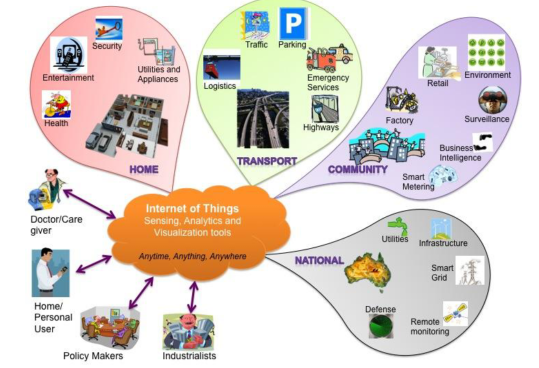
Figure 1: Internet of Things Semantics showing the end users and application areas based on data. Adapted from (Gubbi et al., 2013).
Giving the potentials of the IoT and Semantic Webs, the researcher is proposing an innovative model called “Proactive Model” which will change how we live our lives. This new model will introduce advanced tools through which people will communicate daily about what to eat, what to exercise, what to drink, and basically what to do to live a healthy life and to avoid any unexpected catastrophic event such as stroke or heart attack. The existing tools will still be available. However, the innovative approach of the Proactive Model will be pervasive and embedded into our daily lives, and the use of the reactive models will be minimum. The Proactive Model is based on the Internet of Things technologies and Web 4.0 and semantic web.
Forces such as technology, ease of use, user acceptance, culture and so forth may affect the implementation of the Proactive Model. The IoT is still facing technical issues such as the bottleneck when processing large-scale of data, DNS and TCP which need to be modified to better serve the IoT services (Atzori et al., 2010; Gubbi et al., 2013), and the Proactive Model which is based on the IoT technology. Security and privacy may be an obstacle to the implementation of the Proactive Model as the data about our body, our activities and ourselves will be transmitted continuously on a second-by-second basis somewhere in the Cloud. The supporting forces, as well as the challenging forces, are discussed in detail later in this project.
Scope
The current model is a reactive model which waits until the catastrophic event such as heart attack, a stroke happens. As indicated in TED’s video of (Hougland, 2014), you can place a band in your hand which can assist elder people or people who are highly likely exposed to some health issues such as heart attack which can prevent them from living their lives. There are additional similar tools which can help elder people who live alone to call for help when they fall, or any unexpected thing happens to them. All these tools are reactive tools which will still exist after the Proactive Model but will have minimal use because the Proactive Model will take over.
The features of the Proactive Model which distinguish it from the current reactive model include the monitor of the health activities such as exercises, the monitor of the healthy diets and the health factors levels such as potassium, and cholesterol, and the monitor of the daily energy and performance. These three major monitor features are the key factors for the success of the Proactive Model. The Proactive Model is expected to be intelligent and smart to guide individuals. It is not limited to the elder people, but it will be available to all people at all age levels. Thus, the result is promising for the young generation and the elder generation, which will lead to the more cognitive ability to their activities, diets and daily energy and performance.
The future of the Proactive Model is very promising as the plan is to extend it to act as a personal assistant providing guidance not only at the activities, diets or energy level but also at the financial level. The Proactive Model is expected to provide financial recommendations such as closest and less expensive gym, and gas stations and so forth. Thus, the benefits of the Proactive Model will embrace every aspect of our lives.
While the Proactive Model provides very promising benefits to all people at all age levels, it has the limitation that it does not measure psychological emotions or feelings, nor depressions or emotional disorders. Moreover, the cost of the Proactive Model may not be affordable especially for the initial production release, which will make it only available for those who can afford it. However, the plan is to make it more affordable for all users.
Purpose
The purpose of this project is to propose an innovative Proactive Model and its Socio-Technical plan in the age of Big Data and Internet of Things (IoT). The innovative Proactive Model is based on the IoT technology, which is based on Web 4.0 the Semantic Web. The Socio-Technical plan is a critical component of the proposed model. The key elements of both technical and social systems relevant to IoT technology which is the underlying technology of the Proactive Model are identified through the analysis of the current forces in both systems. The identification of these elements will allow investigating how the technical and social systems can be integrated together to create an environment which supports effective Proactive Model while suppressing the dysfunctional aspects of this new work environment. The Socio-Technical plan includes not only the social and technology system, but also other systems such as the medical system, policy makers and governance system, and users, community, and culture system.
The potential impact of the Socio-Technical plan in the context of the IoT technology and the Proactive Model will involve not only the positive outcome and the impact which is reflected in the “Joint Optimization,” but also in the “Affectability” of the system, which will lead to better innovation, better performance, and a better dialogical approach involving careful cognitive awareness of values, emotions, and interests of all social groups.
Proactive Model Forces
The Socio-Technical plan will consider forces and factors which can affect the innovation such as complexity, compatibility, acceptance, ease of use, culture, trust, security, privacy and so forth. Figure 2 illustrates the integration of the technical system with the social system and the technical and social forces for the proposed innovative “Proactive Model.” These forces are not isolated or autonomous, nor they are static. They are dynamic, and the changes must be considered at both level the technical level as well as the social level. Thus, the arrows from technical to social and from social to technical illustrate the dynamic nature of the Socio-Technical system of the Proactive Model.
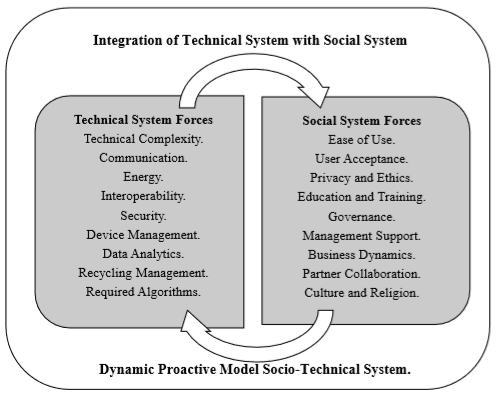
Figure 2. The Dynamic Innovative Proactive Model Technical and Social Forces.
Supporting Forces
As illustrated in Figure 2, the technical forces include the communication, energy, interoperability, security, device management, data analytics, and recycling management. The social forces include the ease of use, user acceptance, privacy and ethics, education and training, governance, management support, business dynamics, partner collaboration, and culture and religion. Some of these forces are supporting forces while other are challenging forces. The supported forces include the Web 4.0 technology and semantic web which provides a new innovative paradigm which can support this new innovative Proactive Model Socio-Technical system. The success of the existing reactive model and tools which did not exist a few years ago is an indication about the possibility of advanced and better tools and models which are more intelligent using the Web Intelligence technology. The need for better health and better cognitive awareness system is a supporting factor. When using the current reactive model, the ambulance can be called as indicated in TED’s video of (Hougland, 2014), to save the life of the person. Such a service is costly and can add stress to the patients. However, with the Proactive Model, this cost is reduced to the minimum. Thus, the reduction in cost is a supporting factor in this innovative Proactive Model. Moreover, the existing support of integrating Social and Technical systems together is another supporting factor as the Proactive Model will not start from scratch when integrating these two systems together, but rather expanding on the current integrated systems to enhance the optimization as well as the affectibility.
Challenging Forces
While there are supporting forces for the Proactive Model, there are more challenging forces than the supporting forces. The concept might be new and not convincing that there will be a device to be used on a daily basis other than the smartphones or tablets. The device that is based on the Proactive Model is to guide the person on what food to eat, what exercises to do, what food to avoid, what time to sleep, and so forth. The device will act intelligently as a bodyguard for the body be based on the measure of the vitamins in the body and the nutrition elements that are needed for the body. If there is a smart device now to measure the glucose level of the diabetic people which is based on the current technology, there must be other types of devices that are smarter based on the Web of Intelligence Connections and Semantic Web of Web 4.0. The technical complexity of developing such a device which will act as a doctor who diagnoses the body on a daily basis. Sensors might be required; blood reading might be required as the case with the diabetic people, or saliva test, a patch to measure the blood pressure. These requirements must be communicated to the medical experts. Thus, the communication between technical experts and medical expert is another challenging, in addition to the challenges of communicating this new technology and model to the users. The security is another challenge which will require securing all these data which will be collected daily on the body needs, and organs functions. This data is expected to generate a large amount of data which can be categorized as Big Data. The analytical aspect of such streaming data is another challenge which may require new algorithm. The recycling data is another challenge. This data which is collected on a daily basis might be needed for a year for the analytical purpose. However, after the end of the life cycle of the data, it must be recycled fully and completely to protect the privacy of the users. The privacy and the ethics are challenges for this Proactive Model Socio-Technical system as it is very critical to ensure the protection of the sensitive data especially if this data deals with the body and the health of the person. The device of the Proactive Model may face additional challenges in the culture and religion domain, despite the anticipated benefits of such a technology. The business dynamics is another challenge for this new model. The partner collaboration is another challenge which needs to be addressed to make sure all parties such as medical experts, technical experts, executives and so forth are collaborating and working together to achieve such a promising model.
Methods
As indicated in the challenging forces, collaboration and communication among the involved parties are required for the success of such a model. A method must be used to guarantee not only the successful communication and collaboration among the involved parties but also the success of such a new model. Thus, there is a requirement and need for a structure of a group which focuses on providing a solution to a particular problem in this new paradigm and new technology such as the Think Tank (Caliva & Scheier, 1992). The “Think Tank” is the proposed method to be used in the process of the development and implementation of this new model. Think Tank has two models; the “one roof” model and the “without a roof” models (Whittenhauer, n.d.). The “without roof” model is described to be more effective than the “one roof” model because it does not require the funding which is required for the “one roof” on travel costs and so forth. Thus, the Proactive Model will be using the “without a roof” Think Tank model. The Think Tank for the Proactive Model will be named as Proactive Think Tank. The main objective of the “Proactive Think Tank” is to drive not only the innovation of the Proactive Model but also the adoption of the new devices at every age from teenagers, to adults to seniors. The Proactive Think Tank will ensure the integration of the technical system and social system to enhance the optimization and the affectability of the Socio-Technical plan of the Proactive Model.
Besides the Think Tank approach, the Delphi method will be used to provide the group communication process and make it effective enough to allow a group of individuals from different domains functioning as a whole to be able to deal with the complexity of this innovation (Saizarbitoria Iñaki, Arana Landín, & Casadesús Fa, 2006), which involves experts from technology and computer science domain, policy makers, users, community, and medical domain. The panel of the experts will not only be involved in the current design but also in the future of the Proactive Model and the Socio-Technical plan for that model. The key factors to ensure the success of the Proactive Model and the Socio-Technical plan are the selection of the members of the panel which should be based on their knowledge, capabilities, and independence. When using the Delphi method, the danger of dominant influence of any of the panel members is minimized because the identification of the members is hidden when expressing opinions.
Models
The traditional Socio-Technical approach is to design the technical component and then fit people to it (Appelbaum, 1997; L. Chen & Nath, 2008). This traditional approach leads to performance issues at high social costs (Appelbaum, 1997). Thus, the integration of social and technical elements is very critical. As indicated in (Geels, 2004), the focus should not just be on innovation, but also on the use and the functionality. In (Geels, 2004), the sectoral systems of innovation are expanded to be socio-technical systems. While the emphasis of the existing innovation systems is on the production side where innovations emerge, the expanded Socio-Technical systems involve production, diffusion, and use of technology (Geels, 2004). See Figure 3 for the basic elements and resources of Socio-Technical Systems, adapted from (Geels, 2004).
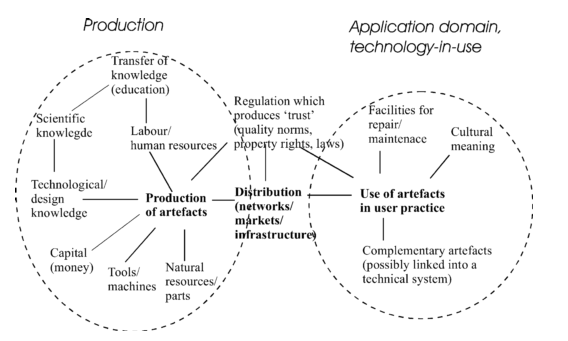
Figure 3. The Basic Elements and Resources of Socio-Technical System. Adapted from (Geels, 2004).
The Socio-Technical systems are not autonomous systems. However, they are the outcome of the human activities, which are embedded in social groups sharing certain characteristics such as certain roles, responsibilities, norms, perceptions and so forth (Geels, 2004). On the production side, the social groups can include education entities such as schools and universities, public/private laboratories, technical institutes, suppliers, banks, engineers and so forth. On the functional and user side, the social group includes public authorities, consumers, media, and so forth. Thus, the Socio-Technical systems can form a structuring context for human actions on both sides of the production and functional and user sides (Geels, 2004).
The Socio-Technical theory, which was introduced at the Tavistock Institute in London in mid of 20th century, indicates that any organization or the organizational work system has two independent sub-systems; the social and the technical sub-systems (L. Chen & Nath, 2008). The social sub-system is concerned with the attributes of people and users such as attitude, skills, values and so forth, and the relationship between people, reward systems, and the authority structures, while the technical sub-system is concerned with the processes, tasks, and technology required to transform inputs to outputs (L. Chen & Nath, 2008). The underlying concept of the Socio-Technical theory is that the technical system and social system must be integrated to determine the best overall solutions for the organization (L. Chen & Nath, 2008). In contrast with the traditional and conventional approach, using the Socio-Technical theory, the re-design of the work system of the organization must consider the impact of each sub-system on the other and the requirement for each sub-system simultaneously (L. Chen & Nath, 2008).
As proposed in (Hayashi & Baranauskas, 2013), the Socio-Technical perspective might contribute to the dialogical approach to involve careful listening and understand one another, as well as awareness of each other’s values, emotions, and interests (Hayashi & Baranauskas, 2013). The design of the Socio-Technical system is based on the underlying concept and premise that a work unit or an organization is a combination of both social and technical elements (Appelbaum, 1997). Both social and technical elements should work together to accomplish the ultimate goal (Appelbaum, 1997). Thus, the work system develops and produces both physical products and social/psychological outcomes (Appelbaum, 1997). The positive outcome called “Joint Optimization” is the key success factor for these two elements of the social and technical (Appelbaum, 1997). Thus, the Socio-Technical system for Proactive Model should involve all social groups from software engineers and the employees to consumers at all levels. Moreover, the “Affectability” concept which is proposed by (Hayashi & Baranauskas, 2013), for the Socio-Technical perspective in the context of the educational technology, is another key success factor for the Proactive Model.
The Joint Optimization and Affectability of the Socio-Technical Plan of the Proactive Model are implemented through the integration of all systems involved such as the technical system, social system, medical system, governance system. The integration and the communication of these systems to work together in harmony is a critical requirement for the Proactive Model. The Affectability of the Socio-Technical Plan will be demonstrated in the final product of the Proactive Model such as ease of use, user acceptance, and user trust. The proposed Socio-Technical Plan for the Proactive Model involves not only people and technology but also other domains such as medical as it plays a significant role in guiding health activities, diets, and energy. Figure 4 illustrates the proposed Four-Runner Socio-Technical Plan for the Proactive Model which is based on the IoT technology and Semantic Web.

Figure 4. The Proposed Four-Runner Socio-Technical Approach for the Innovative Proactive Model.
The innovation is not about developing new products, but it is about reinventing business process and building entirely new markets to meet untapped customer needs (Albarran, 2013). For some businesses, innovation is deliberative and planned, while for others innovation is the direct result of a triggering event such as a change in external market conditions or internal performance which forces a change in business strategy (Gershon). Three main types of innovations: product innovation, process innovation, and business model innovation. This innovative Proactive Model is not only about product innovation, but also process innovation and business model innovation. The product innovation is reflected in the final product which provides the health and financial benefits to people and organization. The process innovation and business model innovation reflect the integration of all systems to generate Joint Optimization and Affectability for the Socio-Technical plan and the product of the Proactive Model. The process model is illustrated in Figure 5.

Figure 5: Proposed Scenario Planning Model for the Innovative Proactive Model.
The key benefit of this proposed Scenario Planning process is to reveal the different strategy of the future based on which more flexible and more thoughtful and better decision can be made. The process innovation model begins with the analysis of the external and internal forces such as technical complexity for the product, culture challenges, communication with other involved parties’ challenges. The second phase of this innovative process is about the uncertainty analysis. The third phase of this process involves strategic planning which contains all scenarios from best-case scenarios to the worst-case scenarios. The fourth phase involves the opportunities and strategy alternative, followed by the last phase of the strategy selection.
The proposed business model innovation involves new departments which are not a conventional department in organizations. Human Resources Department, Financial Department, Marketing Department, Information Technology, and Sales Departments are good examples of the conventional and traditional department in the organization. However, the innovative business model involves other departments such as medical department, governance department, and so forth in the organization. The Join Optimization and the Affectability of the Socio-Technical plan of the Proactive Model require the integration of these parties. Embedding new departments such as medical department and governance department in the organization can ensure the success of the process innovation and the product innovation. Figure 6 illustrates the business model innovation for the Proactive Model.

Figure 6. Innovative Business Model for the Innovative Proactive Model.
Analytical Plan
As illustrated in the proposed Scenario Planning, the analysis begins with the internal and external forces such as communication and integration between these units of technology, medical, governance, and people. The analysis should also cover the technical complexity and the current algorithm and machine learning. The analysis can reveal the need for the new algorithm, or new models. The analysis plan should also include the uncertainty factors which can have a negative impact on the implementation of the Proactive Model. One major uncertainty factor is the acceptance of users, which needs to be analyzed and measured regarding population, age, profession, income, and so forth.
The analytical plan for this Proactive Model includes the proto-type analysis which is the first product pre-release to ensure the product is implemented in accordance with the design specifications and requirements. The proto-type analysis can take between 1-3 months analysis based on the model of the device, simple model, medium model, and complex model. The analysis plan will also include more comprehensive analysis based on a survey on the acceptance of the product, ease of the product, and trust of the product.
As indicated in (Wu, Zhao, Zhu, Tan, & Zheng, 2011) understanding the reasons for the acceptance or rejection of a new product is very challenging. However, the Technology Acceptance Model (TAM) is regarded to be the most powerful theory to analyze the explain the technology usage behavior and whether the product acceptance is based on ease of use, trust or other factors. This model has been extended to include the trust factor as indicated in (Wu et al., 2011). This comprehensive analysis plan includes the TAM model as illustrated in Figure 7. The analysis covers the relationship among the identified variables, and the direct effect of the variables to provide insight into the central tendencies of the relationships. Thus, statistical analysis will be used such as coefficient, correlation, ranges, central tendencies, and analysis of variances ANOVA.
The Innovation Diffusion Theory (IDT) is another well-established theory to analyze the user adoption (L.-d. Chen, Gillenson, & Sherrell, 2004). The innovation diffusion is achieved through the acceptance of the users and the use of new ideas or things such as the Proactive Model-based device. As indicated d in (L.-d. Chen et al., 2004), the relative advantages, the compatibility, complexity, “triability,” and observability were found to explain 49 to 87 percent of the variance in the rate of its adoption. Other studies found that relative advantage, compatibility, and complexity were found consistently related to the rate of innovation adoption (L.-d. Chen et al., 2004). Thus, these critical variables will be used in the comprehensive analysis of the innovative Proactive Model which is based on IoT technology, and the Joint Optimization of the proposed Socio-Technical plan.

Figure 7. The Proposed Model for the innovative Proactive Model based on TAM and IDT Model to Analyze and Evaluate the User Acceptance, and all other Variables.
Anticipated Results
The organizations involved in this innovative Proactive Model represent diverse industries such as IT, Health, Policy Makers and Governance. Other organizations such as Financial, and insurance may get involved to shape additional features of the Proactive Model. Tremendous efforts are expected to be exerted at all organizations level. The commitment and the determination of these organization must drive this innovation because it will change the way we live our daily lives. The initial reaction of users might not be completely positive. It might receive rejection or resistance from users and medical industry, as it might be threatening to the medical field. This innovation is to enhance the medical field and health insurance. The initial user interface might be challenging. However, the user interface is expected to be advanced and more intuitive to all users. The cost factor will play another role in the adoption of the new innovative Proactive Model. Until the cost goes down, only the users who can afford it will be able to enjoy the benefits of such innovation. The anticipated result also involves the impact of the culture and religion on the adoption of this innovation. It might not get adopted completely in certain communities due to culture and certain practices. This innovation is not expected to celebrate success completely for several decades. However, afterward, this innovation will be embedded into our lives and will become invisible as it is expected to be part of our lives.
Conclusion
The internet has changed the way we live our lives today, and how we communicate with each other, and how we perform our work. The interaction between people is completely different today than the interaction between people a few decades ago. The human innovation has moved along from sending messages using birds which arrive in several days or months, to sending messages using smartphone which arrives at the receiver instantaneously.
Technology without social consideration will be hard to sell. Organizations and businesses such as Blockbuster and Yahoo are good examples for those organizations which did not consider the social system and did not lean to the users’ requirements, besides the lack of strategic scenario planning. Thus, the researcher proposed an innovative Proactive Model which is based on the IoT, Web 4.0 and Semantic Web with a proposed Socio-Technical system to ensure the success of this innovation. The purpose of the Proactive Model is not only to save lives but also to live healthy lives. The current model is reactive waiting until a catastrophic event happens to react and save the life of people. The IoT technology and Semantic Web have the potential to add a new dimension to our lives, and how we live our daily lives and how not only people communicate with each other but also how devices will communicate with each anywhere and anytime.
This project also covered the external and internal forces which can have a positive and negative impact on the implementation and adoption of the Proactive Model. The analysis of these factors provides a good insight into the anticipated results of the innovation and the timeframe for full implementation. The project also discussed the methods to be implemented to ensure communications and sound decisions from the involved experts are made using Delphi method and the Think Tank approach as well.
For the analytical plan, the analysis will start with the external and internal forces to overcome any challenges at that level. The analysis plan includes the uncertainty associated not only with the diffusion of innovation but also with the underlying concept of the Proactive Model to live smart life. After the consideration of the Socio-Technical plan and the strategic scenario planning, the first release will be analyzed and evaluated using the prototype for one to three months. Any modification to the original design and all involved components such as sensors are implemented, a more comprehensive analysis plan will be conducted. The comprehensive analytical plan applies the concept of TAM and IDT models to evaluate and analyze the acceptance of users, the ease of use, and trust, which can lead to the behavioral intention for use. The anticipated result based on the historical records for innovation indicate the minimal use at the beginning of the product release. However, after few years, the product will be mature enough and known enough to be used ubiquitously as it is expected to be embedded and invisible in our lives. Our today’s life will be described by the future generations as a primitive generation, the same way we now describe the “stone age” generation.
Areas of Future Research
The IoT is a promising domain which requires future research. It is part of the Web 4 and Semantic Web. The Proactive Model is based on these advanced technologies. There are several areas for more research using this technology. Examples of these areas of future research include robotic models such as robotic taxi (Atzori et al., 2010), robotic assistant, robotic teachers, and robotic cars which can be on the road without drivers. The smart environment requires more research in different areas such as comfortable homes and offices for all people with automated systems with minimum cost. The industrial plant is another area for more research to integrate robotics and automation at a higher level using IoT. As indicated in (Atzori et al., 2010), the machine/robot can help in improving the automation in industrial plants with a massive deployment of RFID tags associated with the production parts. Interconnection of various systems to develop a smart city can provide ubiquitous services to improve the quality of life in the city by making it easier and more convenient for people to find information of interest (Al-Fuqaha et al., 2015).
The underlying concept behind the areas for future research is the IoT technology and the Semantic Web technology which involves Artificial Intelligence. The key element is the intelligence and how we can turn all systems to be smart to be under the human services. The future innovations are anticipated to involve smart and intelligent robotics devices and systems. The implications of these robotic innovations are not trivial. However, if these innovations do not sound feasible today, they might be very much feasible and embedded into the human lives several decades from today.
References
Aghaei, S., Nematbakhsh, M. A., & Farsani, H. K. (2012). Evolution of the world wide web: From WEB 1.0 TO WEB 4.0. International Journal of Web & Semantic Technology, 3(1), 1.
Al-Fuqaha, A., Guizani, M., Mohammadi, M., Aledhari, M., & Ayyash, M. (2015). Internet of things: A survey on enabling technologies, protocols, and applications. IEEE Communications Surveys & Tutorials, 17(4), 2347-2376.
Albarran, A. B. (2013). Media management and economics research in a transmedia environment: Routledge.
Appelbaum, S. H. (1997). Socio-technical systems theory: an intervention strategy for organizational development. Management decision, 35(6), 452-463.
Atzori, L., Iera, A., & Morabito, G. (2010). The internet of things: A survey. Computer networks, 54(15), 2787-2805.
Caliva, L., & Scheier, I. H. (1992). The Think Tank Techniques. Retrieved from http://academic.regis.edu/volunteer/ivan/sect03/sect03b.htm, The Center for Creative Community(Santa Fe, New Mexico).
Chen, L.-d., Gillenson, M. L., & Sherrell, D. L. (2004). Consumer acceptance of virtual stores: a theoretical model and critical success factors for virtual stores. ACM SIGMIS Database, 35(2), 8-31.
Chen, L., & Nath, R. (2008). A socio-technical perspective of mobile work. Information Knowledge Systems Management, 7(1, 2), 41-60.
Choudhury, N. (2014). World Wide Web and its journey from web 1.0 to web 4.0.
De Mauro, A., Greco, M., & Grimaldi, M. (2015). What is big data? A consensual definition and a review of key research topics. Paper presented at the AIP Conference Proceedings.
Geels, F. W. (2004). From sectoral systems of innovation to socio-technical systems: Insights about dynamics and change from sociology and institutional theory. Research policy, 33(6-7), 897-920.
Gershon, R. A. MEDIA INNOVATION: Disruptive Technology and the Challenges of Business Reinvention: Kalamazoo, Western Michigan University.
Gubbi, J., Buyya, R., Marusic, S., & Palaniswami, M. (2013). Internet of Things (IoT): A vision, architectural elements, and future directions. Future Generation computer systems, 29(7), 1645-1660.
Hayashi, E. C., & Baranauskas, M. C. C. (2013). Affectibility in educational technologies: A socio-technical perspective for design. Journal of Educational Technology & Society, 16(1), 57.
Hougland, B. (2014). What is the Internet of Things? And why should you care? [Video file]. TED Talks: Retrieved from https://www.youtube.com/watch?v=_AlcRoqS65E.
Kambil, A. (2008). What is your Web 5.0 strategy? Journal of business strategy, 29(6), 56-58.
Patel, K. (2013). Incremental journey for World Wide Web: introduced with Web 1.0 to recent Web 5.0–a survey paper.
Saizarbitoria Iñaki, H., Arana Landín, G., & Casadesús Fa, M. (2006). A Delphi study on motivation for ISO 9000 and EFQM. International Journal of Quality & Reliability Management, 23(7), 807-827.
Whittenhauer, K. (n.d.). Effective Think Tank Methods. Retrieved from http://classroom.synonym.com/effective-think-tank-methods-5728092.html.
Wu, K., Zhao, Y., Zhu, Q., Tan, X., & Zheng, H. (2011). A meta-analysis of the impact of trust on technology acceptance model: Investigation of moderating influence of subject and context type. International Journal of Information Management, 31(6), 572-581.

 Think and Knowledge Tank