Information Technology Requirements in Healthcare

Dr. O. Aly
Computer Science

The purpose of this discussion is to address one of the sectors that utilizes a few unique information technology (IT) requirements.  The selected sector for this discussion is health care. The discussion addresses the IT needs based on a case study.   The discussion begins with Information Technology Key Role in Business, followed by the Healthcare Industry Case Study.

Information Technology Key Role in Business

Information technology (IT) is a critical resource for businesses in the age of Big Data and Big Data Analytics (Dewett & Jones, 2001; Pearlson & Saunders, 2001).  IT supports and consumes a significant amount of the resources of enterprises.  IT needs to be managed wisely like other significant types of business resources such as people, money, and machines.  These resources must return a value to the business. Thus, enterprises must carefully evaluate its resources including the IT resources that can be efficiently and effectively used. 

Information system and technology are now integrated with almost every aspect of every business.  IT and IS play significant roles in business, as it simplifies the organizational activities and processes.  Enterprises can gain competitive advantages when utilizing appropriate information technology.  The inadequate information system can cause a breakdown in providing services to customers or developing products which can harm sales and eventually the businesses (Bhatt & Grover, 2005; Brynjolfsson & Hitt, 2000; Pearlson & Saunders, 2001).  The same thing applies when inefficient business processes sustained by ill-fitting information system and technology as they increase the cost on the business without any return on investment or value.  The lag in the implementation or poor process adaptation reduce the profits and the growth and can place the business behind other competitors. The failure of the information system and technology in business is caused primarily by ignoring them during the planning of the business strategy and organizational strategy.  IT will fail to support business goals and organizational systems because it was not considered in the business and organizational strategy. When the business strategy is misaligned with the organizational strategy, IT is subject to failure (Pearlson & Saunders, 2001).

IT Support to Business Goals

Enterprises should invest in IT resources that will benefit them.  They should make investment in systems that supports their business goals including gaining competitive advantages (Bhatt & Grover, 2005).  Although IT represents a significant investment in businesses, yet, the poorly chosen information system can become an obstacle to achieving the business goals (Dewett & Jones, 2001; Henderson & Venkatraman, 1999; Pearlson & Saunders, 2001).  When the IT does not allow the business to achieve its goals, or lack the capacity required to collect, store, and transfer critical information for the business, the results can be disastrous, leading to dissatisfied customers, or excessive costs for production.  The Toys R US store is an excellent example of such an issue (Pearlson & Saunders, 2001).  The well-publicized website was not designed to process and fulfill orders fast enough.  The site could be redesigned with an additional cost which could have been saved if the IT strategy and business goals were discussed together to be aligned together.

IT Support to Organizational Systems

Organizations systems including people, work processes, and structure represent the core elements of the business.  Enterprises should plan to enable these systems to work together efficiently to achieve the business goals (Henderson & Venkatraman, 1999; Pearlson & Saunders, 2001; Ryssel, Ritter, & Georg Gemünden, 2004). When the IT of the business fails to support the business’ organization systems, the result is a misalignment of the resources needed to achieve the business goals.  For instance, when organizations decide to use Enterprise Resource Planning (ERP) system, the system often dictates how many business processes are executed.  When enterprises deploy a technology, they should think through various aspects such as how the technology will be used in the organization, who will use it, how they will use it, how to make sure the application chosen accomplishes what is intended.  For instance, an organization which plans to institute a wide-scale telecommuting program would need an information system strategy that is compatible with its organization strategy (Pearlson & Saunders, 2001).  The desktop PCs located within the corporate office are not the right solution for a telecommuting organization.  Laptop computers application that are accessible online anywhere and anytime are a most appropriate solution.  If a business only allows the purchase of desktop PCs and only builds systems accessible from desks within the office, the telecommuting program is subject to failure.  Thus, information systems implementation should support the organizational systems and should be aligned with the business goals.

Advantages of IT in Business

Business is able to transform local business to international business with the advent of information system and internet (Bhatt & Grover, 2005; Zimmer, 2018).  Organizations are under pressures to take advantages of information technology to gain competitive advantages.  They are turning to information technology to streamline services and enhance the performance.  IT has become an essential feature in the landscape of the business that aid business to decrease the costs, improve communication, develop recognition, and release more innovative and attractive products.

IT streamlines communication as effective communication is critical to an organization’s success (Bhatt & Grover, 2005; Zimmer, 2018). A key advantage of information system lies in its ability to streamline communication both internally and externally.  For instance, online meeting and video conferencing platform such as Skype, WebEx provide business the opportunity to collaborate virtually in real-time, reducing costs associated with bringing clients on-site or communicating with staff who work remotely.  IT enables Enterprises to connect almost effortlessly with international suppliers and consumers. 

IT can enhance the competitive advantages in the marketplace of the business by facilitating strategic thinking and knowledge transfer (Bhatt & Grover, 2005; Zimmer, 2018).  When using IT as a strategic investment and not as a means to an end, IT provides business with the tools they need to properly evaluate the market and implement strategies needed for a competitive edge.

IT stores and safeguards information, as information management is another domain of IT (Bhatt & Grover, 2005; Zimmer, 2018).  IT is essential to any business that must store and safeguard sensitive information such as financial data for long periods.  Various security techniques can be applied to ensure the data is stored in a secure place.  Organizations should evaluate the options available to store their data such as locally using local data center or cloud-based storage methods. 

IT cuts costs and eliminate waste  (Bhatt & Grover, 2005; Zimmer, 2018).  Although IT implementation at the beginning will be expensive, in the long run, it becomes incredibly cost-effective by streamlining the operational and managerial processes of the business.  Thus, investing in the appropriate IT is key for a business to gain a return on investment.  For instance, the implementation of online training programs is a classic example of IT improving the internal processes of the business by reducing the costs and employees’ time spent outside of work, and travel costs. Information technology enables organizations to implement more with less investment without sacrificing quality or value.

Healthcare Industry Case Study

The healthcare industry generated extensive data driven by keeping patients’ records, complying with regulations and policies, and patients care (Raghupathi & Raghupathi, 2014).  The current trend is digitalizing this explosive growth of the data in the age of Big Data (BD) and Big Data Analytics (BDA) (Raghupathi & Raghupathi, 2014).  BDA has made a revolution in healthcare by transforming the valuable information, knowledge to predict epidemics, cure diseases, improve quality of life, and avoid preventable deaths (Van-Dai, Chuan-Ming, & Nkabinde, 2016).  Various applications of BDA in healthcare include pervasive health, fraud detection, pharmaceutical discoveries, clinical decision support system, computer-aided diagnosis, and biomedical applications. 

Healthcare Big Data Benefits and Challenges

            Healthcare sector employs BDA in various aspect of healthcare such as detecting diseases at early stages, providing evidence-based medicine, minimizing doses of medication to avoid any side effects, and delivering useful medicine base on genetic analysis.  The use of BD and BDA can reduce the re-admission rate, and thereby the healthcare related costs for patients are reduced.  Healthcare BDA can be used to detect spreading diseases earlier before the disease gets spread using real-time analytics (Archenaa & Anita, 2015; Raghupathi & Raghupathi, 2014; Wang, Kung, & Byrd, 2018).   Example of the application of BDA in the healthcare system is Kaiser Permanente implementing a HealthConnect technique to ensure data exchange across all medical facilities and promote the use of electronic health records (Fox & Vaidyanathan, 2016).

            Despite the various benefits of BD and BDA in the healthcare sector, various challenges and issues are emerging from the application of BDA in healthcare.  The nature of the healthcare industry poses challenging to BDA (Groves, Kayyali, Knott, & Kuiken, 2016).  The episodic culture, the data puddles, and the IT leadership are the three significant challenges of the healthcare industry to apply BDA.  The episodic culture addresses the conservative culture of the healthcare and the lack of IT technologies mindset creating rigid culture.  Few providers have overcome this rigid culture and started to use the BDA technology. The data puddles reflect the silo nature of healthcare.  Silo is described as one of the most significant flaws in the healthcare sector (Wicklund, 2014).  The use of the technology properly is lacking in healthcare sector resulting in making the industry fall behind other industries. All silos use their methods to collect data from labs, diagnosis, radiology, emergency, case management and so forth.  The IT leadership is another challenge is caused by the rigid culture of the healthcare industry.  The lack of the latest technologies among the IT leadership in the healthcare industry is a severe problem. 

Healthcare Data Sources for Data Analytics

            The current healthcare data is collected from clinical and non-clinical sources (InformationBuilders, 2018; Van-Dai et al., 2016; Zia & Khan, 2017).  The electronic healthcare records are digital copies of the medical history of the patients.  It contains a variety of data relevant to the care of the patients such as demographics, medical problems, medications, body mass index, medical history, laboratory test data, radiology reports, clinical notes, and payment information. These electronic healthcare records are the most critical data in healthcare data analytics, because it provides effective and efficient methods for the providers and organizations to share data (Botta, de Donato, Persico, & Pescapé, 2016; Palanisamy & Thirunavukarasu, 2017; Van-Dai et al., 2016; Wang et al., 2018).  

The biomedical imaging data plays a crucial role in healthcare data to aid disease monitoring, treatment planning and prognosis.  This data can be used to generate quantitative information and make inferences from the images that can provide insights into a medical condition.  The images analytics is more complicated due to the noises of the data associated with the images and is one of the significant limitations with biomedical analysis (Ji, Ganchev, O’Droma, Zhang, & Zhang, 2014; Malik & Sangwan, 2015; Van-Dai et al., 2016). 

The sensing data is ubiquitous in the medical domain both for real-time and for historical data analysis.  The sensing data involve several forms of medical data collection instruments such as the electrocardiogram (ECG) and electroencephalogram (EEG) which are vital sensors to collect signals from various parts of the human body.  The sensing data plays a significant role for intensive care units (ICU) and real-time remote monitoring of patients with specific conditions such as diabetes or high blood pressure.  The real-time and long-term analysis of various trends and treatment in remote monitoring programs can help providers monitor the state of those patients with certain conditions(Van-Dai et al., 2016). 

The biomedical signals are collected from many sources such as hearts, blood pressure, oxygen saturation levels, blood glucose, nerve conduction, and brain activity.  Examples of biomedical signals include electroneurogram (ENG), electromyogram (EMG), electrocardiogram (ECG), electroencephalogram (EEG), electrogastrogram (EGG), and phonocardiogram (PCG).  The biomedical signals real-time analytics will provide better management of chronic diseases, earlier detection of adverse events such as heart attacks, and strokes and earlier diagnosis of disease.   These biomedical signals can be discrete or continuous based on the kind of care or severity of a particular pathological condition (Malik & Sangwan, 2015; Van-Dai et al., 2016).

The genomic data analysis helps better understand the relationship between various genetic, mutations, and disease conditions. It has great potentials in the development of various gene therapies to cure certain conditions.  Furthermore, the genomic data analytics can assist in translating genetic discoveries into personalized medicine practice (Liang & Kelemen, 2016; Luo, Wu, Gopukumar, & Zhao, 2016; Palanisamy & Thirunavukarasu, 2017; Van-Dai et al., 2016).

The clinical text data analytics using the data mining are the transformation process of the information from clinical notes stored in unstructured data format to useful patterns.  The manual coding of clinical notes is costly and time-consuming, because of their unstructured nature, heterogeneity, different format, and context across different patients and practitioners.  Various methods such as natural language processing (NLP) and information retrieval can be used to extract useful knowledge from large volume of clinical text and automatically encoding clinical information in a timely manner (Ghani, Zheng, Wei, & Friedman, 2014; Sun & Reddy, 2013; Van-Dai et al., 2016).

The social network healthcare data analytics is based on various kinds of collected social media sources such as social networking sites, e.g., Facebook, Twitter, Web Logs, to discover new patterns and knowledge that can be leveraged to model and predict global health trends such as outbreaks of infections epidemics (InformationBuilders, 2018; Luo et al., 2016; Van-Dai et al., 2016; Zia & Khan, 2017).

IT Requirements for Healthcare Sector

The basic requirement for the implementation of this proposal included not only the tools and required software, but also the training at all levels from staff, to nurses, to clinicians, to patients.  The list of the requirements is divided into system requirement, implementation requirement, and training requirements. 

Cloud Computing Technology Adoption Requirement

The volume is one of the significant characteristics of BD, especially in the healthcare industry (Manyika et al., 2011).  Based on the challenges addressed earlier when dealing with BD and BDA in healthcare, the system requirements cannot be met using the traditional on-premise technology center, as it cannot handle the intensive computation requirements of BD, and the storage requirement for all the medical information from various hospitals from the four States (Hu, Wen, Chua, & Li, 2014). Thus, the cloud computing environment is found to be more appropriate and a solution for the implantation of this proposal.  Cloud computing plays a significant role in BDA (Assunção, Calheiros, Bianchi, Netto, & Buyya, 2015).  The massive computation and storage requirement of BDA brings the critical need for cloud computing emerging technology (Mehmood, Natgunanathan, Xiang, Hua, & Guo, 2016).  Cloud computing offers various benefits such as cost reduction, elasticity, pay per use, availability, reliability, and maintainability (Gupta, Gupta, & Mohania, 2012; Kritikos, Kirkham, Kryza, & Massonet, 2017).  However, although cloud computing offers various benefits, it has security and privacy issues using the standard deployment models of public cloud, private cloud, hybrid cloud, and community cloud.  Thus, one of the major requirements is to adopt the Virtual Private Cloud as it has been regarded as the most prominent approach to trusted computing technology (Abdul, Jena, Prasad, & Balraju, 2014).

 Security Requirement

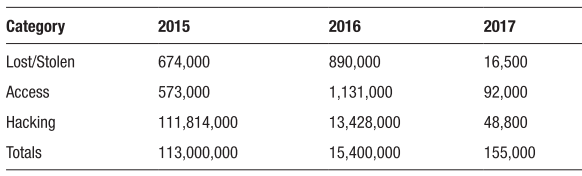
Cloud computing has been facing various threats (Cloud Security Alliance, 2013, 2016, 2017).   Records showed that over the last three years from 2015 until 2017, the number of breaches, lost medical records, and settlements of fines are staggering (Thompson, 2017).  The Office of Civil Rights (OCR) issued 22 resolution agreements, requiring monetary settlements approaching $36 million (Thompson, 2017).  Table 1 shows the data categories and the total for each year. 

Table 1.  Approximation of Records Lost by Category Disclosed on HHS.gov (Thompson, 2017)
Furthermore, a recent report published by HIPAA showed the first three months of 2018 experienced 77 healthcare data breaches reported to the OCR (HIPAA, 2018d).  In the second quarter of 2018, at least 3.14 million healthcare records were exposed (HIPAA, 2018a).  In the third quarter of 2018, 4.39 million records exposed in 117 breaches (HIPAA, 2018c).

Thus, the protection of the patients’ private information requires the technology to extract, analyze, and correlated potentially sensitive dataset (HIPAA, 2018b).  The implementation of BDA requires security measures and safeguards to protect the privacy of the patients in the healthcare industry (HIPAA, 2018b).  Sensitive data should be encrypted to prevent the exposure of data in the event of theft (Abernathy & McMillan, 2016).  The security requirements involve security at the VPC cloud deployment model as well as at the local hospitals in each State (Regola & Chawla, 2013).  The security at the VPC cloud deployment model should involve the implementation of security groups and network access control lists to allow access to the right individuals to the right applications and patients’ records.  Security group in VPC acts as the first line of defense firewall for the associated instances of the VPC (McKelvey, Curran, Gordon, Devlin, & Johnston, 2015).  The network access control lists act as the second layer of defense firewall for the associated subnets, controlling the inbound and the outbound traffic at the subnet level (McKelvey et al., 2015). 

The security at the local hospitals level in each State is mandatory to protect patients’ records and comply with HIPAA regulations (Regola & Chawla, 2013).  The medical equipment must be secured with authentication and authorization techniques so that only the medical staff, nurses and clinicians have access to the medical devices based on their role.  The general access should be prohibited as every member of the hospital has a different role with different responses.  The encryption should be used to hide the meaning or intent of communication from unintended users (Stewart, Chapple, & Gibson, 2015).   The encryption is an essential element in security control especially for the data in transit (Stewart et al., 2015).  The hospital in all four State should implement the encryption security control using the same type of the encryption across the hospitals such as PKI, cryptographic application, and cryptography and symmetric key algorithm (Stewart et al., 2015).

The system requirements should also include the identity management systems that can correspond with the hospitals in each state. The identity management system provides authentication and authorization techniques allowing only those who should have access to the patients’ medical records.  The proposal requires the implementation of various encryption techniques such as secure socket layer (SSL), Transport Layer Security (TLS), and Internet Protocol Security (IPSec) to protect information transferred in public network (Zhang & Liu, 2010). 

Hadoop Implementation for Data Stream Processing Requirement

While the velocity of BD leads to the speed of generating large volume of data and requires speed in data processing (Hu et al., 2014), the variety of the data requires specific technology capabilities to handle various types of dataset such as structured, semi-structured, and unstructured data (Bansal, Deshpande, Ghare, Dhikale, & Bodkhe, 2014; Hu et al., 2014).  Hadoop ecosystem is found to be the most appropriate system that is required to implement BDA (Bansal et al., 2014; Dhotre, Shimpi, Suryawanshi, & Sanghati, 2015).  The implementation requirements include various technologies and various tools.  This section covers various components that are required when implementing Hadoop technology in the four States for healthcare BDA system.

Hadoop has three significant limitations, which must be addressed in this design.  The first limitation is the lack of technical support and document for open source Hadoop (Guo, 2013).   Thus, this design requires the Enterprise Edition of Hadoop to get around this limitation using Cloudera, Hortonworks, and MapR (Guo, 2013). The final decision for which product will be determined by the cost analysis team.  The second limitation is that Hadoop is not optimal for real-time data processing (Guo, 2013). The solution for this limitation will require the integration of real-time streaming program as Spark or Storm or Kafka (Guo, 2013; Palanisamy & Thirunavukarasu, 2017). This requirement of integrating Spark is discussed below in a separate requirement for this design (Guo, 2013). The third limitation is that Hadoop is not a good fit for large graph dataset (Guo, 2013). The solution for this limitation requires the integration of GraphLab which is also discussed below in a separate requirement for this design.

Conclusion

Information technology (IT) play a significant role in various industries including the healthcare sector.  This project discussed the IT role in businesses, the requirement to be aligned with the strategic goal and organizational system of the business.  If IT systems are not included during the planning of the business strategy and organizational strategy, the IT integration into the business at a later stage is very likely to set for failure.  IT offers various advantages to business including the competitive advantages in the marketplace.  Healthcare industry is no exception to integrate IT systems.  Healthcare sector has been suffering from various challenges including the high cost of services and inefficient service to patients.  The case study showed the need for IT systems requirements that can place the industry into competitive advantages offering better care to patients with low cost.  Various IT integrations have been used lately in the healthcare industry including Big Data Analytics, Hadoop technology, security systems, and cloud computing. Kaiser Permanente, for instance, applied Big Data Analytics using HealthConnet to provide care to patients with lower cost and better care, which are aligned with the strategic goal of its business.

References

Abdul, A. M., Jena, S., Prasad, S. D., & Balraju, M. (2014). Trusted Environment In Virtual Cloud. International Journal of Advanced Research in Computer Science, 5(4).

Abernathy, R., & McMillan, T. (2016). CISSP Cert Guide: Pearson IT Certification.

Archenaa, J., & Anita, E. M. (2015). A survey of big data analytics in healthcare and government. Procedia Computer Science, 50, 408-413.

Assunção, M. D., Calheiros, R. N., Bianchi, S., Netto, M. A. S., & Buyya, R. (2015). Big Data Computing and Clouds: Trends and Future Directions. Journal of Parallel and Distributed Computing, 79, 3-15. doi:10.1016/j.jpdc.2014.08.003

Bansal, A., Deshpande, A., Ghare, P., Dhikale, S., & Bodkhe, B. (2014). Healthcare data analysis using dynamic slot allocation in Hadoop. International Journal of Recent Technology and Engineering, 3(5), 15-18.

Bhatt, G. D., & Grover, V. (2005). Types of information technology capabilities and their role in competitive advantage: An empirical study. Journal of management information systems, 22(2), 253-277.

Botta, A., de Donato, W., Persico, V., & Pescapé, A. (2016). Integration of Cloud Computing and Internet Of Things: a Survey. Future Generation computer systems, 56, 684-700.

Brynjolfsson, E., & Hitt, L. M. (2000). Beyond computation: Information technology, organizational transformation and business performance. Journal of Economic perspectives, 14(4), 23-48.

Cloud Security Alliance. (2013). The Notorious Nine: Cloud Computing Top Threats in 2013. Cloud Security Alliance: Top Threats Working Group. 

Cloud Security Alliance. (2016). The Treacherous 12: Cloud Computing Top Threats in 2016. Cloud Security Alliance: Top Threats Working Group. 

Cloud Security Alliance. (2017). The Treacherous 12 Top Threats to Cloud Computing. Cloud Security Alliance: Top Threats Working Group. 

Dewett, T., & Jones, G. R. (2001). The role of information technology in the organization: a review, model, and assessment. Journal of Management, 27(3), 313-346.

Dhotre, P., Shimpi, S., Suryawanshi, P., & Sanghati, M. (2015). Health Care Analysis Using Hadoop. Internationaljournalofscientific&tech nologyresearch, 4(12), 279r281.

Fox, M., & Vaidyanathan, G. (2016). Impacts of Healthcare Big Data:  A Framwork With Legal and Ethical Insights. Issues in Information Systems, 17(3).

Ghani, K. R., Zheng, K., Wei, J. T., & Friedman, C. P. (2014). Harnessing big data for health care and research: are urologists ready? European urology, 66(6), 975-977.

Groves, P., Kayyali, B., Knott, D., & Kuiken, S. V. (2016). The ‘Big Data’ Revolution in Healthcare: Accelerating Value and Innovation.

Guo, S. (2013). Hadoop operations and cluster management cookbook: Packt Publishing Ltd.

Gupta, R., Gupta, H., & Mohania, M. (2012). Cloud Computing and Big Data Analytics: What is New From Databases Perspective? Paper presented at the International Conference on Big Data Analytics, Springer-Verlag Berlin Heidelberg.

Henderson, J. C., & Venkatraman, H. (1999). Strategic alignment: Leveraging information technology for transforming organizations. IBM systems journal, 38(2.3), 472-484.

HIPAA. (2018a). At Least 3.14 Million Healthcare Records Were Exposed in Q2, 2018. Retrieved 11/22/2018 from https://www.hipaajournal.com/q2-2018-healthcare-data-breach-report/. 

HIPAA. (2018b). How to Defend Against Insider Threats in Healthcare. Retrieved 8/22/2018 from https://www.hipaajournal.com/category/healthcare-cybersecurity/. 

HIPAA. (2018c). Q3 Healthcare Data Breach Report: 4.39 Million Records Exposed in 117 Breaches. Retrieved 11/22/2018 from https://www.hipaajournal.com/q3-healthcare-data-breach-report-4-39-million-records-exposed-in-117-breaches/. 

HIPAA. (2018d). Report: Healthcare Data Breaches in Q1, 2018. Retrieved 5/15/2018 from https://www.hipaajournal.com/report-healthcare-data-breaches-in-q1-2018/. 

Hu, H., Wen, Y., Chua, T., & Li, X. (2014). Toward Scalable Systems for Big Data Analytics: A Technology Tutorial. Practical Innovation, Open Solution, 2, 652-687. doi:10.1109/ACCESS.2014.2332453

InformationBuilders. (2018). Data In Motion – Big Data Analytics in Healthcare. Retrieved from http://docs.media.bitpipe.com/io_10x/io_109369/item_674791/datainmotionbigdataanalytics.pdf, White Paper.

Ji, Z., Ganchev, I., O’Droma, M., Zhang, X., & Zhang, X. (2014). A cloud-based X73 ubiquitous mobile healthcare system: design and implementation. The Scientific World Journal, 2014.

Kritikos, K., Kirkham, T., Kryza, B., & Massonet, P. (2017). Towards a Security-Enhanced PaaS Platform for Multi-Cloud Applications. Future Generation computer systems, 67, 206-226. doi:10.1016/j.future.2016.10.008

Liang, Y., & Kelemen, A. (2016). Big Data Science and its Applications in Health and Medical Research: Challenges and Opportunities. Austin Journal of Biometrics & Biostatistics, 7(3).

Luo, J., Wu, M., Gopukumar, D., & Zhao, Y. (2016). Big data application in biomedical research and health care: a literature review. Biomedical informatics insights, 8, BII. S31559.

Malik, L., & Sangwan, S. (2015). MapReduce Framework Implementation on the Prescriptive Analytics of Health Industry. International Journal of Computer Science and Mobile Computing, ISSN, 675-688.

Manyika, J., Chui, M., Brown, B., Bughin, J., Dobbs, R., Roxburgh, C., & Byers, A. H. (2011). Big Data: The Next Frontier for Innovation, Competition, and Productivity. McKinsey Global Institute.

McKelvey, N., Curran, K., Gordon, B., Devlin, E., & Johnston, K. (2015). Cloud Computing and Security in the Future Guide to Security Assurance for Cloud Computing (pp. 95-108): Springer.

Mehmood, A., Natgunanathan, I., Xiang, Y., Hua, G., & Guo, S. (2016). Protection of Big Data Privacy. Institute of Electrical and Electronic Engineers, 4, 1821-1834. doi:10.1109/ACCESS.2016.2558446

Palanisamy, V., & Thirunavukarasu, R. (2017). Implications of Big Data Analytics in developing Healthcare Frameworks–A review. Journal of King Saud University-Computer and Information Sciences.

Pearlson, K., & Saunders, C. (2001). Managing and Using Information Systems: A Strategic Approach. 2001: USA: John Wiley & Sons.

Raghupathi, W., & Raghupathi, V. (2014). Big data analytics in healthcare: promise and potential. Health Information Science and Systems, 2(1), 1.

Regola, N., & Chawla, N. (2013). Storing and Using Health Data in a Virtual Private Cloud. Journal of medical Internet research, 15(3), 1-12. doi:10.2196/jmir.2076

Ryssel, R., Ritter, T., & Georg Gemünden, H. (2004). The impact of information technology deployment on trust, commitment and value creation in business relationships. Journal of business & industrial marketing, 19(3), 197-207.

Stewart, J., Chapple, M., & Gibson, D. (2015). ISC Official Study Guide.  CISSP Security Professional Official Study Guide (7th ed.): Wiley.

Sun, J., & Reddy, C. (2013). Big Data Analytics for Healthcare. Retrieved from https://www.siam.org/meetings/sdm13/sun.pdf.

Thompson, E. C. (2017). Building a HIPAA-Compliant Cybersecurity Program, Using NIST 800-30 and CSF to Secure Protected Health Information.

Van-Dai, T., Chuan-Ming, L., & Nkabinde, G. W. (2016, 5-7 July 2016). Big data stream computing in healthcare real-time analytics. Paper presented at the 2016 IEEE International Conference on Cloud Computing and Big Data Analysis (ICCCBDA).

Wang, Y., Kung, L. A., & Byrd, T. A. (2018). Big Data Analytics: Understanding its Capabilities and Potential Benefits for Healthcare Organizations. Technological Forecasting and Social Change, 126, 3-13. doi:10.1016/j.techfore.2015.12.019

Wicklund, E. (2014). ‘Silo’ one of healthcare’s biggest flaws. Retrieved from http://www.healthcareitnews.com/news/silo-one-healthcares-biggest-flaws.

Zhang, R., & Liu, L. (2010). Security models and requirements for healthcare application clouds. Paper presented at the Cloud Computing (CLOUD), 2010 IEEE 3rd International Conference on.

Zia, U. A., & Khan, N. (2017). An Analysis of Big Data Approaches in Healthcare Sector. International Journal of Technical Research & Science, 2(4), 254-264.

Zimmer, T. (2018). What Are the Advantages of Information Technology in Business?
Critical Information Technology Solutions Used to Gain Competitive Advantages

Dr. O. Aly
Computer Science

Abstract

The purpose of this project is to discuss critical information technology solutions used to gain competitive advantages.  The discussion begins with Big Data and Big Data Analytics addressing essential topics such as the Hadoop ecosystem, NoSQL databases, Spark integration for real-time data processing, and Big Data Visualization. Cloud computing is an emerging technology to solve Big Data challenges such as storage for the large volume of the data, and the high-speed data processing to extract value from data.  Enterprise Resource Planning (ERP) is a system that can aid organizations to gain competitive advantages if implemented right.  The project discusses various success factor for the ERP system.  Big Data plays a significant role in ERP, which is also discussed in this project.  The last technology addressed in this project is the Customer Relationship Management (CRM), its building blocks and integration.  The project addresses the challenges and costs associated with CRM.  The best practice of CRM is addressed which can assist in the successful implementation of CRM.  In summary, enterprises should evaluate various information technology systems that are developed to aid them to gain competitive advantages. 

Keywords: Big Data Analytics; Cloud Computing; ERP; CRM.

Introduction

            Enterprises should evaluate various information technologies to gain competitive advantages in the market.  Big Data and Big Data Analytics are one of the significant topics in information technology and computer science.  Cloud computing is another critical topic in the same domains, as cloud computing emerged to solve the challenge of Big Data.  Thus, this project begins with these top information technologies.  The discussion covers various major topics in Big Data such as the Hadoop ecosystem, Spark for real-time processing.  The discussion of the cloud computing covers the various service models and deployment models which cloud computing offers.             

The most common business areas that require information technology support include Enterprise Resource Planning (ERP), Customer Relationship Management (CRM), Product Life Cycle Management (PLM), Supply Chain Management (SCM), and Supplier Relationship Management (SRM) (DuttaRoy, 2016). Thus, this project discusses ERP and CRM as additional critical information technology systems that aid Enterprises gain competitive advantages. 

Big Data and Big Data Analytics

Big Data is now the buzzword in the field of computer science and information technology.  Big Data attracted the attention of various sectors, researchers, academia, government and even the media (Géczy, 2014; Kaisler, Armour, Espinosa, & Money, 2013).   In the 2011 report of the International Data Corporation (IDC), it is reporting that the amount of the information which will be created and replicated will exceed 1.8 zettabytes which are 1.8 trillion gigabytes in 2011. This amount of information is growing by a factor of 9 in just five years (Gantz & Reinsel, 2011). 

BD and BDA are terms that have been used interchangeably and described as the next frontier for innovation, competitions, and productivity (Maltby, 2011; Manyika et al., 2011).  BD has a multi-V model with unique characteristics, such as volume referring to the large dataset, velocity refers to the speed of the computation as well as data generation, and variety referring to the various data types such as semi-structured and unstructured (Assunção, Calheiros, Bianchi, Netto, & Buyya, 2015; Hu, Wen, Chua, & Li, 2014).  BD is described as the next frontier for competition, innovation, and productivity.  Various industries have taken this opportunity and applied BD and BDA in their business models (Manyika et al., 2011).  There are many technologies such as Cloud Computing, Hadoop Map/Reduce Hive, and others have emerged to deal with the phenomena of the Big Data.  Data without analysis has no value to organizations. 

Hadoop Ecosystem

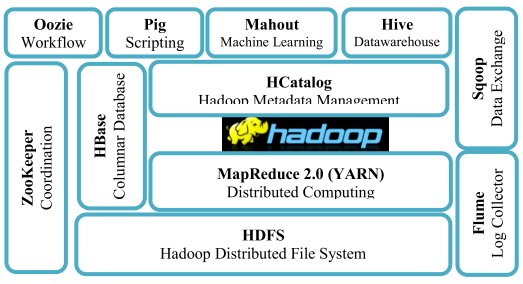
While the velocity of BD leads to the speed of generating large volume of data and requires speed in data processing (Hu et al., 2014), the variety of the data requires specific technology capabilities to handle various types of dataset such as structured, semi-structured, and unstructured data (Bansal, Deshpande, Ghare, Dhikale, & Bodkhe, 2014; Hu et al., 2014).  Hadoop ecosystem is found to be the most appropriate system that is required to implement BDA (Bansal et al., 2014; Dhotre, Shimpi, Suryawanshi, & Sanghati, 2015).  Hadoop technologies have been in the front-runner for Big Data application (Bansal et al., 2014; Chrimes, Zamani, Moa, & Kuo, 2018).  Hadoop ecosystem will be part of the implementation requirement as it is proven to serve well with intensive computation using large datasets (Raghupathi & Raghupathi, 2014; Wang, Kung, & Byrd, 2018).   The Hadoop version that is required is version 2.x to include YARN for resource management  (Karanth, 2014).  Hadoop 2.x also include HDFS snapshots to provide a read-only image of the entire or a particular subset of a filesystem to protect against user errors, backup, and disaster recovery (Karanth, 2014). The Hadoop platform can be implemented to gain more insight into various areas (Raghupathi & Raghupathi, 2014; Wang et al., 2018). Hadoop ecosystem involves Hadoop Distributed File System, MapReduce, and NoSQL database such as HBase, and Hive to handle a large volume of dataset using various algorithms and machine learning to extract values from the medical records that are structured, semi-structured, and unstructured (Raghupathi & Raghupathi, 2014; Wang et al., 2018).  Other components to support Hadoop ecosystem include Oozie for workflow, Pig for scripting, and Mahout for machine learning which is part of the artificial intelligence (AI) (Ankam, 2016; Karanth, 2014).  Hadoop ecosystem includes other tools such as Flume for log collector, Sqoop for data exchange, and Zookeeper for coordination (Ankam, 2016; Karanth, 2014).  HCatalog is a required component to manage the metadata in Hadoop (Ankam, 2016; Karanth, 2014).   Figure 1 shows the Hadoop ecosystem before integrating Spark for real-time analytics.


Figure 1.  Hadoop Architecture Overview (Alguliyev & Imamverdiyev, 2014).

NoSQL Databases

In the age of BD and BDA, the traditional data store is found inadequate to handle not only the large volume of the dataset but also the various types of the data format such as unstructured and semi-structured (Hu et al., 2014).   Thus, Not Only SQL (NoSQL) database is emerged to meet the requirement of the BDA.  These NoSQL data stores are used for modern, and scalable databases (Sahafizadeh & Nematbakhsh, 2015).  The scalability feature of the NoSQL data stores enables the systems to increase the throughput when the demand increases during the processing of the data (Sahafizadeh & Nematbakhsh, 2015).  The platform can incorporate two scalability types to support the large volume of the datasets; the horizontal and vertical scalability.  The horizontal scaling allows the distribution of the workload across many servers and nodes to increase the throughput, while the vertical scaling requires more processors, more memories and faster hardware to be installed on a single server (Sahafizadeh & Nematbakhsh, 2015). 

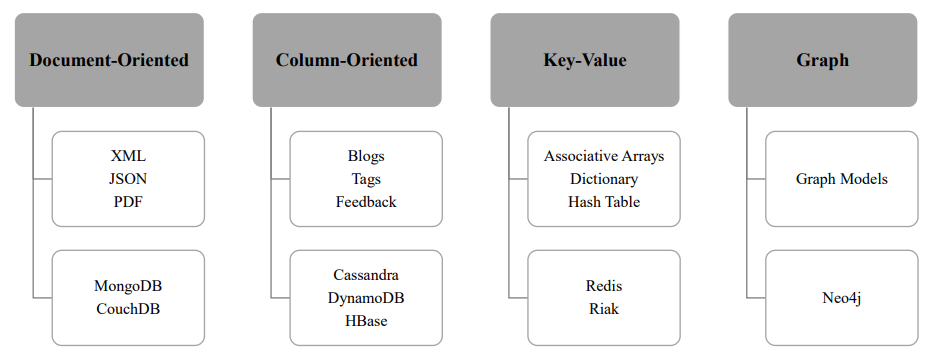
NoSQL data stores have various types such as MongoDB, CouchDB, Redis, Voldemort, Cassandra, Big Table, Riak, HBase, Hypertable, ZooKeeper, Vertica, Neo4j, db4o, and DynamoDB.  These data stores are categorized into four types: document-oriented, column-oriented or column-family stores, graph database, and key-value (EMC, 2015; Hashem et al., 2015). The document-oriented data store can store and retrieve collections of data and documents using complex data forms in various formats such as XML and JSON as well as PDF and MS word (EMC, 2015; Hashem et al., 2015).  MongoDB and CouchDB are examples of document-oriented data stores (EMC, 2015; Hashem et al., 2015).  The column-oriented data store can store the content in columns aside from rows with the attributes of the columns stored contiguously (Hashem et al., 2015).  This type of datastore can store and render blog entries, tags, and feedback (Hashem et al., 2015).  Cassandra, DynamoDB, and HBase are examples of column-oriented data stores (EMC, 2015; Hashem et al., 2015).  The key-value can store and scale large volumes of data and contains value and a key to access the value (EMC, 2015; Hashem et al., 2015).  The value can be complicated, but this type of data stores can be useful in storing the user’s login ID as the key referencing the value of patients.  Redis and Riak are examples of the key-value NoSQL data store (Alexandru, Alexandru, Coardos, & Tudora, 2016).  Each of these NoSQL data stores has its limitations and advantages.  The graph NoSQL database can store and represent data using graph models with nodes, edges, and properties related to one another through relations which will be useful for unstructured medical data such as images, and lab results. Neo4j is an example of this type of graph NoSQL database (Hashem et al., 2015).  Figure 2 summarizes these NoSQL data stores, data types for storage, and examples.

Figure 2.  Big Data Analytics NoSQL Data Store Types.

Spark Integration for Real-Time Data Processing

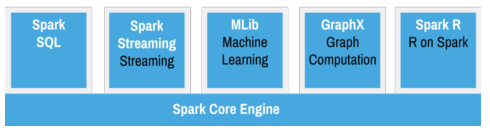
While the architecture of Hadoop ecosystem has been designed in various scenarios for data storage, data management statistical analysis, and statistical association between various data sources distributed computing and batch processing, businesses requires real-time data processing to gain competitive advantages.  However, the real-time data processes cannot be met by Hadoop alone (Basu, 2014).  Real-time analytics will tremendous value to the healthcare proposed system.  Thus, Apache Spark is another component which is required for real-time data processing.  Spark allows in-memory processing for fast response time, bypassing MapReduce operations (Basu, 2014).  With Spark integration with Hadoop, stream processing, machine learning, interactive analytics, and data integration will be possible (Scott, 2015).  Spark will run on top of Hadoop to benefit from YARN and the underlying storage of HDFS, HBase and other Hadoop ecosystem building blocks (Scott, 2015).  Figure 3 shows the core engines of the Spark.


Figure 3. Spark Core Engines (Scott, 2015).

Big Data Visualization

Visualization is one of the most powerful presentations of the data (Jayasingh, Patra, & Mahesh, 2016).  It helps in viewing the data in a more meaningful way in the form of graphs, images, pie charts that can be understood easily.  It helps in synthesizing a large volume of data set such as healthcare data to get at the core of such raw big data and convey the key points from the data for insight (Meyer, M., 2018).  Some of the commercial visualization tools include Tableau, Spotfire, QlikView, and Adobe Illustrator.  However, the most commonly used visualization tools in healthcare include Tableau, PowerBI, and QlikView.

Cloud Computing Technology

Numerous studies discussed and addressed the definition of cloud computing, as it was not well defined (Foster, Zhao, Raicu, & Lu, 2008).  As an effort to identify precisely the term cloud computing IT practitioners, the academics and research community came up with various definitions.  (Vaquero, Rodero-Merino, Caceres, & Lindner, 2008) suggested twenty-two definitions to cloud computing from different research studies.  The underlying concepts of cloud computing rely heavily on providing computing power, storage services, software services, and platform services on demand to customers over the internet (Lewis, 2010).  The access to cloud computing services can scale up or down as needed, and the consumers use the pay-per-use or pay-as-you-go model (Armbrust et al., 2009; Lewis, 2010).

The National Institute of Standards and Technology (NIST) proposed an official definition of cloud computing.  Cloud computing enables ubiquitous, convenient, on-demand network access to a shared pool of configurable computing resources such as network, servers, storage, applications, and services. Organizations can quickly provision and release these resources with minimal effort of management or interaction from a service provider (Mell & Grance, 2011).

Cloud Computing Essential Characteristics

The essential characteristics of cloud computing technology identified by NIST include on-demand self-service, broad network access, resource pooling, rapid elasticity, and measured service (Mell & Grance, 2011).  The on-demand self-service feature provides cloud consumers the computing capabilities such as server time and network storage as needed automatically eliminating the need for any human interaction with a service provider.  The broad network access feature provides capabilities to cloud consumers over the network and the use of various devices such as mobile phones, and tablets from anywhere enabling the heterogeneous client platforms.  The resource pooling feature provides a multi-tenant model that serve multiple consumers sharing the pool of resources.  This feature provides location independence, where the consumers do not know the exact location of the provided resources.  The consumer may be able to specify the location at a higher level of abstraction such as country, state, or datacenter (Mell & Grance, 2011).  The rapid elasticity feature provides capabilities to scale horizontally and vertically to meet the demand.  The measured services feature enables the measurement of the consumption of resources such as processing, storage, and bandwidth. The resource utilization can be monitored, controlled, and reported, providing transparency for both the provider and consumer of the utilized services (Mell & Grance, 2011).

Cloud Computing Three Essential Service Models

Cloud computing offers three essential service models as Infrastructure-as-a-Service (IaaS), Platform-as-a-Service (PaaS), and Software-as-a-Service (SaaS) (Mell & Grance, 2011).  The IaaS layer provides the capability to the consumers to provision storage, processing, networks, and other fundamental computing resources.  Using IaaS, the consumer can deploy and run arbitrary software, which can include operating systems and application.  When using IaaS, the users do not manage or control the underlying infrastructure of the cloud.  The consumers have control over the storage, the operating systems, and the deployed application and limited control of some networking components such as host firewall.  The PaaS allows the cloud computing consumers to deploy applications that are created using programming languages, libraries, services, and tools supported by the providers.  Using PaaS, the cloud computing consumers do not manage or control the underlying infrastructure of the cloud including network, servers, operating systems, or storage.  The consumers have control over the deployed applications and possibly configuration settings for the application-hosting environment.  The SaaS allows cloud computing consumers to use the provider’s applications running on the infrastructure of the cloud.  The SaaS service model consumers can access the applications from various client devices through either a thin client interface, such as a web-based email from a web browser, or a program interface.  The SaaS consumers do not control or manage the underlying infrastructure of the cloud such as network, operating systems, storage, or even individual application capabilities, with the possible exception of limited user-specific application configuration settings  (Mell & Grance, 2011).

Cloud Computing Four Essential Deployment Models

Cloud computing offers four essential deployment models known as public cloud, private cloud, community cloud, and hybrid cloud  (Mell & Grance, 2011).  The public cloud reflects the infrastructure of the cloud available to the general public.  It can be managed, owned and operated by organizations, academic entities, government entities, or a combination of them.  This deployment model resides on the premises of the cloud provider.  The private cloud is the cloud infrastructure designed exclusively for a single organization.  This deployment model can be managed, owned and operated by the organization, or a third party or a combination of both.  This model may reside either on-premises or off-premises.  The community cloud is the cloud infrastructure designed exclusively for a specific community of consumers from organizations that have such as security requirement, compliance consideration, and policy. One or more of organizations in the community, a third party or some combination of them can manage, own, operate the community cloud.  The community cloud can reside on-premises or off-premises.  The hybrid cloud is the cloud infrastructure combining two or more cloud infrastructures such as private, public, or community (Mell & Grance, 2011).  Figure 4 presents the full representation of cloud computing technology per NIST including the standard service models, deployment models, and essential characteristics.

Figure 4.  Overview of Cloud Computing based on NIST’s Definitions.

Cloud Computing Role in Big Data and Big Data Analytics

Cloud computing plays a significant role in BDA (Assunção et al., 2015).  The massive computation and storage requirement of BDA brings the critical need for cloud computing emerging technology (Mehmood, Natgunanathan, Xiang, Hua, & Guo, 2016).  Cloud computing offers various benefits such as cost reduction, elasticity, pay per use, availability, reliability, and maintainability (Gupta, Gupta, & Mohania, 2012; Kritikos, Kirkham, Kryza, & Massonet, 2017).  However, although cloud computing offers various benefits, it has security and privacy issues using the standard deployment models of public cloud, private cloud, hybrid cloud, and community cloud.

Enterprise Resource Planning (ERP)

            American Production and Inventory Control Society (2001), as cited in (Madanhire & Mbohwa, 2016) defined ERP as a method for the effective planning and controlling of all resources needed to take, make, ship and account for customer orders in a manufacturing, distribution or service organization.  This functions integration can be achieved through a software package solution offered by vendors to support the seamless integration of all information flowing through the enterprise, such as financial, accounting and human resources.   ERP is a business management software that is designed to integrate data sources and processes of the entire organization into a combined system (Bahssas, AlBar, & Hoque, 2015).

ERP system is a popular solution which is used by the organization to integrate and automate various processes, performance improvements, and cost reduction.  ERP provides business with a real-time view of its core business processes such as production, planning, manufacturing, inventory management and development (Bahssas et al., 2015). The ERP software is a multi-module application that integrates activities across functional departments such as production, planning, purchasing, inventory control, product distribution, and order tracking.  It allows the automation and integration of business process by enabling data and information sharing to reach best practices in managing the process of the business. 

ERP involves various modules such as accounting, finance, supply chain, human resources, customer information and others (Bahssas et al., 2015; Madanhire & Mbohwa, 2016).  ERP production planning module is used to optimize the utilization of manufacturing capacity, parts, components, and material resources.  ERP purchases module is used to streamline procurement of required raw materials, as it automates the process of identifying potential suppliers, negotiating prices, placing orders to suppliers and related billing processes.  ERP inventory control module is used to facilitate the process of maintaining an appropriate level of stocks in the warehouse through identifying inventory requirements, setting targets, providing replenishment techniques and options, monitoring item usage, reconciling inventory balances and reporting inventory status.  ERP sales module is used for order placement, order scheduling, shipping and invoicing. ERP marketing module is used to support lead generation, direct mailing campaign.  ERP financial module is used to gather financial data from various departments and generate reports such as balance sheet, general ledger, trial balance.  ERP human resources (HR) module is used to maintain a complete employee database to include contact information, salary details, attendance and so forth (Madanhire & Mbohwa, 2016).

Innovations in technology trends have forced ERP designers to establish new development.  Thus, new ERP system designs are implemented to satisfy organizations and customers by evolving new ERP business models.  Furthermore, one of the biggest challenges for ERP is to keep speed with the manufacturing sector which has been moving rapidly from product-centric to customer-centric focus (Bahssas et al., 2015).  Most ERP vendors are required to add a variety of functions and modules to their core systems.

Critical Factors for Successful ERP Implementation

            The implementation of ERP systems is costly, and organizations should be careful when implementing it to ensure its success.  Some believe that ERP systems could hurt their business because of the potential problems of ERP (Umble, Haft, & Umble, 2003). Various studies identified success factors for ERP.  (Umble et al., 2003) addressed the most prominent factors for successful implementation of ERP. The first critical success factor is that organizations should have a clear understanding of the strategic goals.  The commitment by top management is another success factor.  Successful ERP implementation requires excellent project management. The existing organizational structure and processes found in most enterprises are not compatible with the structure, tools, and types of information provided by ERP systems.  Thus, organizational change management is required to ensure the successful implementation of ERP.  ERP implementation teams should be composed of highly skilled professionals that are chosen for their skills, past accomplishments, reputation, and flexibility.  Data accuracy is another success factor for ERP implementation.  The education and training are another success factor for the implementation of the ERP system.   (Bahssas et al., 2015) Indicated that reserving 10-15% of the total ERP implementation budget for training will give an organization an 80% chance of successful implementation.  Focused performance measures must be included from the beginning of the implementation because if the system is not associated with compensation, it will not be successful. 

Big Data and Big Data Analytics Role in ERP

Big Data Analytics plays a significant role in ERP applications (Carlton, 2014; ERP Solutions, 2018; Woodie, 2016).  Enterprise data comprises various departments such as HR, finance, CRM and other essential business functions of a business.  This data can be leveraged to make ERP functionality better.  When Big Data tools are brought together with the ERP system, can unfold valuable insights that can businesses make smarter decisions (Carlton, 2014; Cornell University, 2017; Wailgum, 2018). Many ERP systems fail to make use of real-time inventory and supply chains data because these systems lack the intelligence to make predictions about products demands (Carlton, 2014; ERP Solutions, 2018). Big Data tools can predict demand and help determine what company needs to go forward (ERP Solutions, 2018).  Infor co-president Duncan Angove established Dynamic Science Labs (DSL) aiming to use data science techniques to solve a particular class of business problems for its customers. Employees with big data, math, and coding skills were hired in Cambridge, Massachusetts-based organization to develop proof of concept (POC) (Woodie, 2016).  Big Data systems such as Apache’s Hadoop are creating node-level operating transparencies which affect nearly every current ERP module in real-time (Carlton, 2014).  Managers will be able to quickly leverage ERP Big Data capabilities, thereby enhancing information density and speeding up overall decision-making. In brief, Big Data and Big Data Analytics impact business at all levels, and ERP is no exception.

Customer Relationship Management (CRM)

Customer Relationship Management (CRM) systems assist organizations to manage customer interaction and customer data, automate marketing, sales, and customer support, assess business information and managing partner, vendor, and employee relationships.  A quality CRM system can be scalable to serve the needs of small, medium or large business (Financesonline, 2018).  CRM systems can be customized to allow business is taking actionable customer insights using back-end analytics, identify opportunities with predictive analytics, personalize customer support, and streamline operations based on the history of the customers’ interaction with the business.  Organizations must be aware of the CRM system software available to select the most appropriate CRM system that can better serve their needs. 

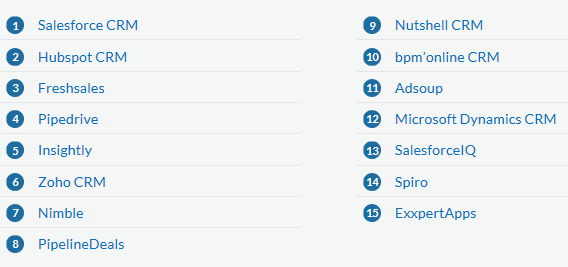
Various reports identified various CRM systems.  The best CRM systems include Salesforce CRM, Hubspot CRM, Fresh sales, Pipedrive, Insightly, Zoho CRM, Nimble, PipelineDeals, Nutshell CRM, Microsoft Dynamics CRM, SalesforceIQ, Spiro, and ExxpertApps.  Table 1 shows the best CRM systems available in the market.


Table 1.  CRM Systems  (Financesonline, 2018).

Customer satisfaction is the critical element to the success of the business (Bygstad, 2003; Pearlson & Saunders, 2001).  Businesses need to continuously satisfy customers, understand their needs and expectations, provide high-quality products or service at a competitive price to maintain success.  These interactions needed to be tracked by the business and analyzed in an organized way to foster long-lasting customer relationships which get transformed into long-term success.  

CRM can aid business increase sales efficiency, drive the satisfaction of customers, streamline the process of the business and make it more efficient, and identify and resolve bottlenecks at any of the operational processes from marketing, sales to the product development (Ahearne, Rapp, Mariadoss, & Ganesan, 2012; Bygstad, 2003).  The development of customer relationship is not a trivial or straightforward task. When it is done right, it places the business in a competitive edge. However, the implementation of CRM is challenging. 

CRM Challenges and Costs

The implementation of CRM demonstrates the value of customers to the business and placing customer service on top priority (Pearlson & Saunders, 2001).  CRM plays a significant role in collaborating the effort between customer service, marketing, and sales in an organization.  However, the implementation of CRM is challenging especially for small business and startups.  Various reports addressed various challenges when implementing CRM.  The cost is the most significant challenges organizations are confronted with when implementing the CRM solution (Sage Software, 2015).  The development of a clear objective to achieve with the CRM system is another challenge when implementing CRM.  Organizations are confronted with the type of deployment whether it should be on-premise or cloud-based CRM.  Other challenges involve the employees’ training, the right CRM solution provider and the integration plan in advance (Sage Software, 2015). 

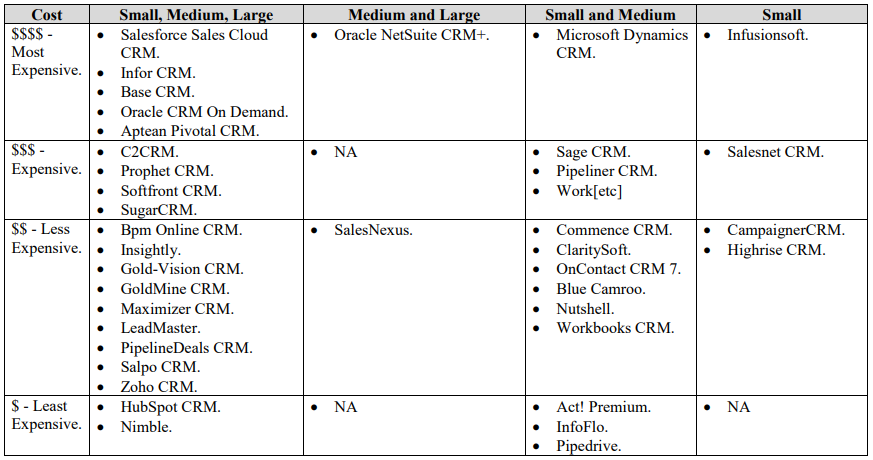
The cost of CRM systems varies from one vendor to another based on the features and deployment key such as data importing, analytics, email integrations, mobile accessibility, email marketing, multi-channel support, SaaS platform, on-premise platform, and SaaS and on-premise.  Some vendors offer CRM for small and medium, or small only, while others offer CRM systems for small, medium and large businesses.  In a report by (Business-Software, 2019), the cost is categorized for more expensive to least expensive using the dollar sign as $$$$ for most expensive, $$$ for expensive, $$ for less expensive and $ for least expensive.  Each vendor CRM system has certain features which must be examined by organizations before making the decision to adopt such a system.  Table 2 provides an idea about the cost from the most expensive, expensive, less expensive, to least expensive.


Table 2.  CRM System Costs based on the Report by (Business-Software, 2019).


The Building Blocks of CRM Systems and Their Integration

Understanding the buildings blocks of the CRM system can assist in the implementation and integration of CRM systems.  CRM involves four core building blocks (Meyer, Matthias & Kolbe, 2005). The acquirement and continuous update of the knowledge base on the needs of customers, motivations, and behavior over the lifetime of the relationship with customers.  The application of the customers’ knowledge to continuously improve performance through a process of learning from success and failures is the second building block of CRM system.  The integration of marketing, sales, and service activities to achieve a common goal is another building block of the CRM system.  The last building block of the CRM system involves the implementation of appropriate systems to support customer knowledge acquisition, sharing, and the measurement of CRM effectiveness. 

CRM integration is a critical building block for CRM success (Meyer, Matthias, 2005).  The process of integrating CRM involves various organizational and operational functions of the business such as marketing, sales and service activities.  CRM requires detailed business processes which can be categorized into three core elements; CRM delivery process, CRM support process, and CRM analysis process.  The delivery process involves direct contact with customers to cover part of the customer process such as campaign management, sales management, service management, and complaint management. The support process involves direct contact with the customer that are not designed to fulfill supporting functions within the CRM context such as market research and loyalty management.  The analysis process consolidates and analyzes the knowledge of customers collected in other CRM processes.  The result of this analysis process is passed to the delivery process, support process and to the service innovation and service production processes to enhance their effectiveness such as customer scoring and lead management, customer profiling and segmentation, feedback and knowledge management. 

Best Practices in Implementing These CRM Systems

Various studies and reports addressed best practices in the implementation and integration of CRM systems into the business (Salesforce, 2018; Schiff, 2018).  Organizations must choose a CRM that fits their needs.  Not every CRM is created equally, and if organizations choose a CRM system without properly researching its features, capabilities, and weaknesses, organizations could end up committed to a system that is not appropriate for the business, and as a result, could lose money.  Organizations should decide whether CRM should be cloud-based or on-premise base CRM (Salesforce, 2018; Schiff, 2018; Wailgum, 2008).  Organizations should decide whether CRM should be a service contract or one that costs more upfront to install.  Business should also decide whether it needs in-depth, highly customizable features, or basic functionality will be sufficient to serve the needs of the business.  Organizations should analyze the options and decide on the CRM system that is most appropriate for the business which can serve the needs to build strong customer relationship and gain a competitive edge in the market.

Well-trained personnel and workforce will help organizations achieve its strategic CRM goal. If organizations do not invest in the training of the workforce on how to utilize the CRM system, CRM tools will become useless.  The CRM systems become effective as organizations allow them to be. When the workforce is not using the CRM system to its full potentials, or if the workforce is misusing the CRM systems, CRM will not perform its functions properly and will not serve the needs of the business as expected (Salesforce, 2018; Schiff, 2018). 

Automation is another critical factor for best practice when implementing CRM systems.  Tasks that are associated with data entry can be automated so that CRM systems will be up to date.  The automation will increase the efficiency of the CRM systems as well as the business overall (Salesforce, 2018; Schiff, 2018).  One of the significant benefits of CRM is its potential in improving and enhancing the cooperative efforts across departments of the business.  When the same information is accessible across various departments, CRM systems eliminate confusions that can be caused by using different terms and different information.  Data without analysis is not meaningless.  Organizations should consider mining the data to get the value that can aid in making sound business decisions.  CRM systems are designed to capture and organize massive amounts of data. If organizations do not take advantages of this massive amount of data to turn it into actionable data, the implementation of CRM will be so limited. The best CRM systems are those that come with built-in analytics features which use advanced programming to mine all captured data and use that information to produce valuable conclusions which can be used for future business decisions.  When organizations take advantages of the CRM built-in analytical feature and analyze the data that CRM system procures, the valuable information can provide insight for business decisions (Salesforce, 2018).  The last element for best practice of the implementation of CRM is for organizations to keep it simple. The best CRM system is the one that will best fit the needs and requirements of the business. The simplicity is a crucial element when implementing CRM.  Organizations should implement CRM that is not complex while it is useful and provides everything the business needs.  Organizations should also consider making changes to the CRM policies where necessary.  The effectiveness of day-to-day operations will be the best indicator of whether the CRM performs as expected, and if it is not, some changes must be made until it performs as expected (Salesforce, 2018; Wailgum, 2008).

Conclusion

This project discussed critical information technology solutions used to gain competitive advantages.  The discussion began with Big Data and Big Data Analytics addressing essential topics such as the Hadoop ecosystem, NoSQL databases, Spark integration for real-time data processing, and Big Data Visualization. Cloud computing is an emerging technology to solve Big Data challenges such as storage for the large volume of the data, and the high-speed data processing to extract value from data.  Enterprise Resource Planning (ERP) is a system that can aid organizations to gain competitive advantages if implemented right.  The project discussed various success factor for the ERP system.  Big Data plays a significant role in ERP, which is also discussed in this project.  The last technology addressed in this project is the Customer Relationship Management (CRM), its building blocks and integration.  The project addressed the challenges and costs associated with CRM.  The best practice of CRM is addressed which can assist in the successful implementation of CRM.  In summary, enterprises should evaluate various information technology systems that are developed to aid them to gain competitive advantages. 

References

Ahearne, M., Rapp, A., Mariadoss, B. J., & Ganesan, S. (2012). Challenges of CRM implementation in business-to-business markets: A contingency perspective. Journal of Personal Selling & Sales Management, 32(1), 117-129.

Alexandru, A., Alexandru, C., Coardos, D., & Tudora, E. (2016). Healthcare, Big Data and Cloud Computing. management, 1, 2.

Alguliyev, R., & Imamverdiyev, Y. (2014). Big data: big promises for information security. Paper presented at the Application of Information and Communication Technologies (AICT), 2014 IEEE 8th International Conference on.

Ankam, V. (2016). Big Data Analytics: Packt Publishing Ltd.

Armbrust, M., Fox, A., Griffith, R., Joseph, A. D., Katz, R. H., Konwinski, A., . . . Stoica, I. (2009). Above The Clouds: A Berkeley View of Cloud Computing. Electrical Engineering and Computer Sciences University of California at Berkeley.

Assunção, M. D., Calheiros, R. N., Bianchi, S., Netto, M. A. S., & Buyya, R. (2015). Big Data Computing and Clouds: Trends and Future Directions. Journal of Parallel and Distributed Computing, 79, 3-15. doi:10.1016/j.jpdc.2014.08.003

Bahssas, D. M., AlBar, A. M., & Hoque, M. R. (2015). Enterprise resource planning (ERP) systems: design, trends and deployment. The International Technology Management Review, 5(2), 72-81.

Bansal, A., Deshpande, A., Ghare, P., Dhikale, S., & Bodkhe, B. (2014). Healthcare data analysis using dynamic slot allocation in Hadoop. International Journal of Recent Technology and Engineering, 3(5), 15-18.

Basu, A. (2014). Real-Time Healthcare Analytics on Apache Hadoop* using Spark* and Shark. Retrieved from https://www.intel.com/content/dam/www/public/us/en/documents/white-papers/big-data-real-time-healthcare-analytics-whitepaper.pdf.

Business-Software. (2019). Top 40 CRM Software Report.  

Bygstad, B. (2003). The implementation puzzle of CRM systems in knowledge based organizations. Information Resources Management Journal (IRMJ), 16(4), 33-45.

Carlton, R. (2014). 5 Ways Big Data is Changing ERP Software. Retrieved from https://www.erpfocus.com/five-ways-big-data-is-changing-erp-software-2733.html.

Chrimes, D., Zamani, H., Moa, B., & Kuo, A. (2018). Simulations of Hadoop/MapReduce-Based Platform to Support its Usability of Big Data Analytics in Healthcare.

Cornell University. (2017). Enterprise Information Systems. Retrieved from https://it.cornell.edu/strategic-plan/enterprise-information-systems. 

Dhotre, P., Shimpi, S., Suryawanshi, P., & Sanghati, M. (2015). Health Care Analysis Using Hadoop. Internationaljournalofscientific&tech nologyresearch, 4(12), 279r281.

DuttaRoy, S. (2016). SAP Business Analytics: A Best Practices Guide for Implementing Business Analytics Using SAP: Springer.

EMC. (2015). Data Science and Big Data Analytics: Discovering, Analyzing, Visualizing and Presenting Data. (1st ed.): Wiley.

ERP Solutions. (2018). The Role of Big Data Analytics in ERP Applications. Retrieved from https://erpsolutions.oodles.io/big-data-analytics-in-erp/. 

Financesonline. (2018). 15 Best CRM Systems for Your Business. Retrieved from https://financesonline.com/15-best-crm-software-systems-business/. 

Foster, I., Zhao, Y., Raicu, I., & Lu, S. (2008). Cloud Computing and Grid Computing 360-Degree Compared. Paper presented at the 2008 Grid Computing Environments Workshop.

Gantz, J., & Reinsel, D. (2011). Extracting Value From Chaos. International Data Corporation, 1142, 1-12.

Géczy, P. (2014). Big data characteristics. The Macrotheme Review, 3(6), 94-104.

Gupta, R., Gupta, H., & Mohania, M. (2012). Cloud Computing and Big Data Analytics: What is New From Databases Perspective? Paper presented at the International Conference on Big Data Analytics, Springer-Verlag Berlin Heidelberg.

Hashem, I. A. T., Yaqoob, I., Anuar, N. B., Mokhtar, S., Gani, A., & Khan, S. U. (2015). The Rise of “Big Data” on Cloud Computing: Review and Open Research Issues. Information Systems, 47, 98-115. doi:10.1016/j.is.2014.07.006

Hu, H., Wen, Y., Chua, T., & Li, X. (2014). Toward Scalable Systems for Big Data Analytics: A Technology Tutorial. Practical Innovation, Open Solution, 2, 652-687. doi:10.1109/ACCESS.2014.2332453

Jayasingh, B. B., Patra, M. R., & Mahesh, D. B. (2016, 14-17 Dec. 2016). Security issues and challenges of big data analytics and visualization. Paper presented at the 2016 2nd International Conference on Contemporary Computing and Informatics (IC3I).

Kaisler, S., Armour, F., Espinosa, J. A., & Money, W. (2013). Big Data: Issues and Challenges Moving Forward. Paper presented at the Hawaii International Conference on System Sciences

Karanth, S. (2014). Mastering Hadoop: Packt Publishing Ltd.

Kritikos, K., Kirkham, T., Kryza, B., & Massonet, P. (2017). Towards a Security-Enhanced PaaS Platform for Multi-Cloud Applications. Future Generation computer systems, 67, 206-226. doi:10.1016/j.future.2016.10.008

Lewis, G. (2010). Basics About Cloud Computing. Software Engineering Institute Carnegie Mellon University, Pittsburgh.

Madanhire, I., & Mbohwa, C. (2016). Enterprise resource planning (ERP) in improving operational efficiency: Case study. Procedia Cirp, 40, 225-229.

Maltby, D. (2011). Big Data Analytics. Paper presented at the Annual Meeting of the Association for Information Science and Technology.

Manyika, J., Chui, M., Brown, B., Bughin, J., Dobbs, R., Roxburgh, C., & Byers, A. H. (2011). Big Data: The Next Frontier for Innovation, Competition, and Productivity. McKinsey Global Institute.

Mehmood, A., Natgunanathan, I., Xiang, Y., Hua, G., & Guo, S. (2016). Protection of Big Data Privacy. Institute of Electrical and Electronic Engineers, 4, 1821-1834. doi:10.1109/ACCESS.2016.2558446

Mell, P., & Grance, T. (2011). The NIST Definition of Cloud Computing. National Institute of Standards and Technology (NIST), 800-145, 1-7.

Meyer, M. (2005). Multidisciplinarity of CRM Integration and its Implications. Paper presented at the System Sciences, 2005. HICSS’05. Proceedings of the 38th Annual Hawaii International Conference on.

Meyer, M. (2018). The Rise of Healthcare Data Visualization.

Meyer, M., & Kolbe, L. M. (2005). Integration of customer relationship management: status quo and implications for research and practice. Journal of strategic marketing, 13(3), 175-198.

Pearlson, K., & Saunders, C. (2001). Managing and Using Information Systems: A Strategic Approach. 2001: USA: John Wiley & Sons.

Raghupathi, W., & Raghupathi, V. (2014). Big data analytics in healthcare: promise and potential. Health Information Science and Systems, 2(1), 1.

Sage Software. (2015). Top Challenges in CRM Implementation.  

Sahafizadeh, E., & Nematbakhsh, M. A. (2015). A Survey on Security Issues in Big Data and NoSQL. Int’l J. Advances in Computer Science, 4(4), 2322-5157.

Salesforce. (2018). 7 CRM Best Practices to Get the Most out of your CRM. Retrieved from https://www.salesforce.com/crm/best-practices/. 

Schiff, J. L. (2018). 8 CRM implementation best practices.

Scott, J. A. (2015). Getting Started with Spark: MapR Technologies, Inc.

Umble, E. J., Haft, R. R., & Umble, M. M. (2003). Enterprise resource planning: Implementation procedures and critical success factors. European Journal of Operational Research, 146(2), 241-257.

Vaquero, L. M., Rodero-Merino, L., Caceres, J., & Lindner, M. (2008). A Break in the Clouds: Towards a Cloud Definition. Association for Computing Machinery: Computer Communication Review, 39(1), 50-55.

Wailgum, T. (2008). Five Best Practices for Implementing SaaS CRM. Retrieved from https://www.cio.com/article/2435928/customer-relationship-management/five-best-practices-for-implementing-saas-crm.html.

Wailgum, T. (2018). What is CRM? Software for Managing Customer Data. Retrieved from https://www.cio.com/article/2439505/customer-relationship-management/customer-relationship-management-crm-definition-and-solutions.html.

Wang, Y., Kung, L. A., & Byrd, T. A. (2018). Big Data Analytics: Understanding its Capabilities and Potential Benefits for Healthcare Organizations. Technological Forecasting and Social Change, 126, 3-13. doi:10.1016/j.techfore.2015.12.019

Woodie, A. (2016). Making ERP Better with Big Data. Retrieved from https://www.datanami.com/2016/07/08/making-erp-better-big-data/.

Two Good Quality Research Papers On Customer Relationship Management (CRM)

Dr. O. Aly
Computer Science

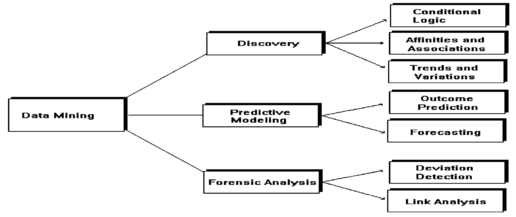
The purpose of this discussion is to address two good-quality research papers on customer relationship management (CRM).  The chosen articles for this discussion are  (Ngai, Xiu, & Chau, 2009; Rygielski, Wang, & Yen, 2002).  The reason for selecting these two papers is that they discuss CRM in the context of business intelligence and data mining.

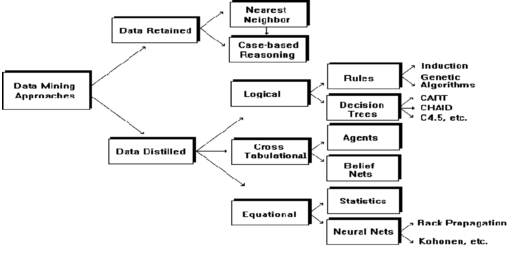
The first journal (Rygielski et al., 2002) is about data mining techniques for CRM.  The authors discussed various aspects of the CRM as well as data mining.  They also discussed the importance of understanding the customers’ lifecycle and the data mining techniques that can be used to extract value from the customers’ data.  Various data mining techniques are discussed and their application with CRM.

The second journal (Ngai et al., 2009) is about the application of data mining techniques in CRM, and a literature review and classification.  The authors identified nine hundred articles to the application of data mining techniques to CRM.  Seven data mining techniques are identified to include association, classification, clustering, forecasting, regression sequence discovery, and visualization.  The authors indicated that classification and association models are the two commonly used models for data mining in CRM.  Four CRM dimensions are identified as customer identification, customer attraction, customer retention, and customer development. 

Customer Relationship Management (CRM)

(Rygielski et al., 2002) defined CRM using four elements of a simple framework; know, target, sell and service.  CRM includes a set of processes and enabling systems to support the enterprise strategy to develop long term, profitable relationships with specified customers (Ngai et al., 2009).  The foundation for successful CRM strategy involves the customers’ data and information technology tools.  The rapid growth of the internet and the emerging technologies increased the opportunities for marketing and transformed the way relationship between business and customers are managed (Ngai et al., 2009).

Enterprises are required to know and understand its market and customers, which involve detailed customer intelligence to select the most profitable customers and identify those no longer worth targeting (Ngai et al., 2009; Rygielski et al., 2002).  The target entails the products to be sold to certain customers through specific channels.  The selling element of CRM requires enterprises to campaign management to increase the effectiveness of the marketing department.  Enterprises seek to retain their customers through services such as call center and help desk. 

CRM Old Model and Relationship Marketing

Technology plays a significant role in marketing. Relationship marketing has become a reality due to the technology application and the advancement in technology (Ngai et al., 2009; Rygielski et al., 2002).  Various enterprises and businesses gained competitive advantages due to the application of technologies such as business intelligence, data mining, data warehouse.  Data mining technique assists organizations to extract value from the data.  When organizations apply data mining techniques, they can determine valuable customers and predict hidden behaviors and allowing businesses to make proactive knowledge-driven decisions.  Data mining provides automated and future-oriented analysis which is beyond the past events that are based on historical data (Rygielski et al., 2002).

The old model of ‘design-build-sell’ which is a product-oriented view is being replaced by ‘sell-build-redesign which is a customer-oriented view (Rygielski et al., 2002). The new approach to one-to-one marketing challenged the traditional process of mass-marketing.  The marketing goal of the traditional approach is to reach more customers and expand the customer base.   

Two-Stage CRM Concepts

Customer Focus: The first stage is to master the basics of building and developing customer focus. This concept shifts the focus from product orientation to customer orientation and define market strategy from outside-in and not from inside-out.  The focus should be on the needs of customers and not on the product’s features (Rygielski et al., 2002).

CRM Integration: The second stage goes beyond the basics by integrating CRM across the entire customer experience chain, leveraging technology to achieve real-time customer management, and continuously innovating the value proposition to customers (Rygielski et al., 2002).

CRM Components

Customer Data: CRM involves several components.  Enterprises must first process customer information before the process of CRM begins.  Customers data can be collected through internal customer data or external sources.  Customer internal data sources include summary tables that describe customers via billing records, customer surveys of a subset of customers who answer the detailed question, and behavioral data contained in transaction systems such as weblogs, credit card records and so forth (Rygielski et al., 2002). 

Data Warehouse: Data warehouse is a critical component for a successful CRM strategy.  Data required for CRM can be limited to a marketing data mart with limited feeds from other corporate systems. External data sources can be a key source for gaining customer knowledge advantage. These external data sources include lookups for current address and phone, household hierarchies, Fair-Isaacs Corp (FICO) credit scores, and webpage viewing profiles (Rygielski et al., 2002).

Analytical Tools: CRM system must analyze the data using statistical tools, OLAP and data mining.  Marketing professionals are required to understand the customer data and business imperative whether the enterprise uses the traditional statistical techniques or one of the data mining software tools. Enterprises should employ data mining analysts who will be involved in the analysis and make sure the business does not lose sight of the original reason for implementing the data mining technique. The segmentation of the market is the result, and decisions are made regarding which segments are attractive (Rygielski et al., 2002).  

Campaign Execution and Tracking: Enterprises should execute campaigns and track the results.  Campaign management software manages and monitors the communications of customers across multiple touchpoints such as direct mail, telemarketing, customer service, point-of-sale, email, and the web.  People and processes contribute to facilitating the interaction between marketing, information technology and sales channels (Rygielski et al., 2002).

Data Mining and Knowledge Discovery

Data mining is defined as a sophisticated data search capability using statistical algorithms to discover correlations and patterns in data (Rygielski et al., 2002).  The term data mining is an analogy to the gold or coal mining, indicating that data nuggets are buried in the large volume of the corporate data warehouses, or information dropped on a website, most of which can lead to better understanding and use of the data.  Data mining approach is complementary to other analysis techniques such as statistics, on-line analytical processing (OLAP), spreadsheets, and necessary data access.   In summary, data mining is another approach to find meaning and value in the data that can aid enterprises to make better strategic and tactic decisions (Ngai et al., 2009; Rygielski et al., 2002). 

When organizations apply data mining techniques, they can discover patterns and relationships hidden in the data. This process of discovering patterns and relationships is part of a more extensive process known as ‘knowledge discovery” (Rygielski et al., 2002). The process of knowledge discovery describes the required steps to ensure meaningful output.  Data mining does not eliminate the need for organizations to understand the data and basic statistical methods.  Data mining does not find patterns or relationships that can be trusted blindly without verification.   The result must be verified.  Data mining assists in generating hypotheses. However, data mining does not validate these hypotheses.     

Data Mining Evolution and Building Blocks

Data mining evolved through four significant phases from the 1960s to 1980s, to 1990s, and 2000s (Rygielski et al., 2002).  Data mining began with the data collection in the 1960s for simple calculations such as summations and average.  The information at this phase answered business questions related to figures derived from data collection sites, such as the total revenue, or average total revenue over a specified period. Specific application programs were created for collecting data and calculations.  Data access is the second data mining generation phase in the 1980s, where databases were used to store data in a structured format. Organizations were able to query the database to access certain data for a specific period. In the 1990s, data navigation phase began as a logical step after the data access where organizations could obtain either a global view or drill down to a particular site for comparison with its peers.  In the 2000s, data mining phase began with the online analytic tools for real-time feedback and information exchange with collaborating business units. 

The primary building blocks of data mining have been developing for decades. These building blocks include statistics, artificial intelligence, and machine learning (Rygielski et al., 2002). These data mining core components are mature.  When integrating these building blocks of the data mining with a relational database, they develop a business environment which can capitalize on knowledge previously buries within the systems.  Figure 1 shows the core components of data mining.


Figure 1.  Core Components of Data Mining.

Data Mining Core Process

When using data mining, the data is formed and constructed into a model.  The model describes patterns and relationships derived from the data.  The implementation of data mining involves three general processes.  The discovery phase is the process of looking in the database to find hidden patterns without pre-determined hypotheses about the patterns. The predictive phase is the process of taking the discovered pattern and using them for future prediction.  The forensic analysis is the process of applying the extracted patterns to find anomalous or unusual data elements (Rygielski et al., 2002).  Figure 2 illustrates these three essential processes.


Figure 2.  Data Mining Three Core Processes (Rygielski et al., 2002).

Data Mining Models and Benefits

Data mining has six types of data models to solve various types of business problems; classification, regression, association analysis, sequence discovery, clustering (Ngai et al., 2009; Rygielski et al., 2002), time series (Rygielski et al., 2002), and visualization (Ngai et al., 2009).  Classification and regressions are used to make predictions, while association and sequence discovery is used to describe behavior.  Clustering model can be used for either forecasting or description.  Prediction and descriptive data mining are used for retail, banking, telecommunication, and other applications. 

In the retail sector, retailers can keep detailed records of every shopping transactions via store-branded credit cards and point-of-sale systems. Retailers can better understand the various customer segments.  Retail applications include performing basket analysis, sales forecasting, database marketing, merchandise planning and allocation (Rygielski et al., 2002).  The banking sector can deploy knowledge discovery for various applications such as card marketing, cardholder pricing and profitability, fraud detection, and predictive life-cycle management.  The telecommunications sector can utilize knowledge discovery for various applications such as call detail record analysis, and customer loyalty. Other knowledge discovery applications are emerging in a variety of sectors such as customer segmentation, manufacturing, warranties, and frequent flier incentives. For the forensic analysis, banks and financial entities can use it for fraud detection to analyze the abnormalities in the data.

Enterprises can integrate data mining into the decision-making process. However, data mining implementation requires skill sets and technology.  While data mining is frequently implemented at the regional or central organization, front line management and operations should have the knowledge gained through the data mining.  The communication of this knowledge gained through data mining can be through an algorithm for scoring, a score or a recommended action associated with a particular customer, employee or a transaction (Rygielski et al., 2002).

Data Mining Techniques

  Data mining techniques involve the retention-based technique and the distillation-based technique (Rygielski et al., 2002). The retention-based technique applies to tasks of predictive modeling and forensic analysis, and not to the knowledge discovery because they do not distill any patterns.  The distillation-based technique has three categories; logical, cross-tabulation, and equational.  These three methods extract patterns from a dataset and use the patterns for various purposes.  The logical approach handles numeric and non-numeric data, while equations require all data to be numeric, and cross-tabulation work only with non-numeric data.   Figure 3 shows the data mining techniques.


Figure 3.  Data Mining Techniques (Rygielski et al., 2002).

Data Mining and CRM

CRM is a broad topic with many layers, one of which is data mining, which is a method or tool that can aid enterprises in their quest to become more customer-oriented.  (Rygielski et al., 2002) discussed the customer lifecycle and the data mining that can aid organizations to gain competitive advantages and customer privacy. 

Customer’s Lifecycle and Data Mining: CRM lifecycle involves the stages in the relationship between customer and the business.  Enterprises can increase the customer’s value by increasing their use or purchase of products they already have, selling them more or higher-margin products, and keeping the customers for a more extended period. The customer relationship changes over time, evolving as the business and customer learn more about each other.  The customer lifecycle involves four stages; prospects, responders, active customers former customers.  The prospects customers are not yet customers but are in the target market.  The responders are prospects who show interest in the product. The active customers are those who are currently using the product or service. The former customer is those who fall into various categories, such as bad customers who did not pay their bills, customers who moved their business to the competing products, customers who incurred a high cost, or customers who are no longer in the target (Rygielski et al., 2002).

Marketing Data Intelligence (MDI): Marketing data intelligence (MDI) is defined as “combining data-driven marketing and technology to increase the knowledge and understanding of customers, products, and transactional data to improve strategic decision making and tactical marketing activity, delivering the CRM challenge”  (Rygielski et al., 2002).  Enterprises should understand the customers’ lifecycle because it provides a good framework for applying data mining to CRM.  The customer’s lifecycle tells what information is available on the input side of the data mining, and what is likely to be interesting on the output side of the data mining.  Data mining can be used over some time to predict changes in detail.  Enterprises can predict the behavior surrounding a particular lifecycle event such as retirement and find other people in a similar life stage and determine which customers are following similar behavior patterns.  The marketing data intelligence is the outcome of this process.

Marketing Data Intelligence (MDI) Components: MDI involves two critical components; customer data transformation, and customer knowledge discovery.  The raw data extracted and transformed from a wide range of internal and external databases, marts or warehouses.  The collected data gets stored in a centralized location where it can be accessed and explored.  The process is continued through customer knowledge discovery, where data mining is implemented, and useful patterns and inferences can be drawn from the data.  The process must be measured and tracked to ensure results are pushed to campaign management software.  Data mining plays a significant role in the process of CRM (Rygielski et al., 2002).  The data mining process involves the interactions with data mart or warehouse in one direction, and the interaction with campaign management software in the other direction.  The link between data mining and the campaign management was mostly manual.  The trend today is to integrate the data mining and the campaign management to gain a competitive advantage.  Enterprises can gain a competitive advantage from such integration by ensuring that the data mining software and the campaign management software share the same definition of the customer segment to avoid modeling the entire database.  For instance, if the ideal segment is about high-income males with the age range of 25-35 living in the northeast, the analysis should be limited to this segment. 

Data Mining and Customers’ Privacy:  The data mining provides various benefits to businesses. However, it can invade the privacy of the customers. (Rygielski et al., 2002) argued that the personalization of CRM is far from the invasion of the privacy.  Personal information can be classified into two categories; data provided and accessible to users, and data generated and analyzed by businesses. Before data mining techniques became popular, customer’s data was collected on a self-provided or transactional basis.  Customers provide general descriptive data which contain demographic data about themselves.  The transactional data refers to data obtained when a transaction takes place, such as product name, quantity, location, and time of purchase. Data mining helps turn customer data into customer profiling information, which belongs to the second category.  It includes customer value, targeting information, customer rating, and behavior tracking.  When abusing this information, people may also suffer from certain forms of discrimination such as insurance or loss of career.  The central issue of privacy is to find a balance between privacy rights for consumers’ protection and businesses benefits. 

(Rygielski et al., 2002) argued that privacy is more of a policy issue than a technology issue.  One basic principle for Enterprises when using personalized technology is to disclose to their customers the kinds of information they are seeking and how that information will be used.  While some list objectives for ethical information and privacy management, others develop a Privacy Bill of Rights that includes fair access by individuals to their personal information.  The privacy of customers can be protected when customers do not have to reveal their identities and can remain anonymous even after implementing data mining.  Various security measures such as encryption and firewall should be implemented.

Conclusion

The discussion involved two main articles that discussed data mining application and CRM.  The application of data mining techniques in CRM is an emerging trend in the industry.  The relationship between business and customers are taking a different path in the presence of the Internet, and Big Data Analytics techniques such as data mining.  Enterprises are under pressure to gain a competitive advantage using data mining techniques to extract value from customers’ data. Enterprises are also under pressures to ensure the protection of the customer’s private information.  Various data mining techniques are available such as statistics and machine learning.  Enterprise should apply the appropriate data mining technique to CRM strategy to gain competitive advantages by not only gaining customers but also retaining the customers.  

References

Ngai, E. W., Xiu, L., & Chau, D. C. (2009). Application of data mining techniques in customer relationship management: A literature review and classification. Expert Systems with Applications, 36(2), 2592-2602.

Rygielski, C., Wang, J.-C., & Yen, D. C. (2002). Data mining techniques for customer relationship management. Technology in society, 24(4), 483-502.

The Trade-off Between Cost, Time and Quality

Dr. O. Aly
Computer Science

Abstract

The purpose of this project is to discuss the trade-off between cost, time and quality of projects. Various essential topics related to projects and project management are discussed.  The discussion begins with the distinct characteristics of the projects and operations, among which projects are temporary while operations are repetitive.  The project addressed the project cycle plan and project development tools.  Various tools for project management include project evaluation and review techniques (PERT), critical path method (CPM) and Gantt Chart.  The project management with the trade-off between time, cost and quality are addressed.  A balance of these three critical elements is required.  This project discusses the project trade-off and the correlation between time and cost.  Some argue that most businesses are cost-time bias at the expense of quality.  Various projects success factors are also discussed in this project.  Various factors cause projects to fail. These factors include misunderstanding of the project requirement, organizational influences, and risk management. Failed projects take a long time to be abandoned or corrected due to logistical problems, political thinking and lack of planning for uncertainty, and risk management.

Keywords: Project Management, Cost, Time, Quality.

Introduction

Enterprises achieve their strategic goals using various project management techniques.  Business requires good performance assessment tools for project management to make sound decision to gain and maintain a competitive edge in the market (Anuar & Ng, 2011).  Management and executives are under pressure to complete projects within a specific time, a specific budget while maintaining the quality, which is considered to be the success factors for project implementation.  This project discusses these factors for project management. It begins with the discussion of projects vs. operations, followed by the project cycle plan and project development tools.

Projects vs. Operations

A project is defined as a temporary venture to implement a unique service or product. The temporary indicates a period that has a beginning and ending, while unique indicates the service or product will be distinguished from the ones in the market (Pearlson & Saunders, 2001; PMI, 2000).  It is also defined as an organization of people dedicated to a specific purpose or object (Pinto & Slevin, 2015).   Projects consist of a set of one-time actions to shift the present event into a new one based on the strategic plan of the enterprise (Pearlson & Saunders, 2001; PMI, 2000).  Projects involve substantial, expensive, unique or high risk and must be completed within a time frame using a certain amount of investment (Pinto & Slevin, 2015).  Projects need to have well-identified objectives and sufficient resources to implement all the required tasks and activities (Pearlson & Saunders, 2001; PMI, 2000). The successful strategy of the enterprise requires two types of decisions; one for the daily operatives, and another for the strategic objectives.  Since IT plays a significant role in all projects of the enterprise, IT project management plays a critical role in the success of the business. 

Projects and operations utilize the resources of the business to transform them into profits.  Human resources and the flow of resources are required for projects and operations of the business.  A project can be divided into sub-projects to implement particular activities such as quality control testing (Pearlson & Saunders, 2001).  During this sub-division of a project, sourcing decisions are made to limit costs.  Various projects are organized at a high level, and elements of a more extensive program which provide a framework from which competing resource requirements are managed, and priorities among a set of projects are shifted.   

Projects and operations have the same elements such as labor skills, training time, worker autonomy, compensation system, material input requirements, supplier ties, raw materials inventory, scheduling complexity, quality control, information flows, worker-management communication, duration and product or service (Pearlson & Saunders, 2001).  However, each element has a different characteristic of the project and the operation.  For instance, operations require low labor skills, training time, worker autonomy, while projects require them high.  Compensation is a lump sum for projects, while hourly or weekly wage for operations. Material input requirements for operations require a high degree of certainty, while projects are uncertain.  Information flows, and worker-management communication is essential in projects, while less critical in operations. The duration is on-going for operations, while temporary for projects.  The product or service is repetitive in operation, while unique in projects.  Table 1 shows the characteristics of operations and projects (Pearlson & Saunders, 2001).

Table 1.  Projects vs. Operations (Pearlson & Saunders, 2001).

Project Cycle Plan and Project Development Tools

Enterprises develop the operations of the business based on a strategic plan that has goals and objectives (Wilson, 2015).  Resources get acquired and managed to implement the plan. The project plan is comprised of sequential steps for organizing and tracking the work of the team which implements the project, while the project management contains a set of tools to balance the competing demands for resources and ensure the completion of the work at every step and evolves throughout the project plan (Pearlson & Saunders, 2001).
            The project cycle plan organizes the activities of the project and sequences them in steps along a timeline so that the project delivers based on the requirements of the stakeholders and customers. The plan is bounded by a critical beginning and end dates and breaks the work into phases (Pearlson & Saunders, 2001).  The plan identifies the resources and time required to complete the work based on the scope of the project. The tasks are identified and assigned to team members.  The management tracks the progress and the phases of the project and coordinates the eventual transition from the project to operational status, a project that leads to the milestone of the project by delivering it.  The project progress is monitored to ensure it meets the requirements of the cost, time, and quality.  If the project does not meet the requirements, some corrections must be made, and the cycle gets adjusted as required (Copertari, 2002; Pearlson & Saunders, 2001).
            Various approaches and software tools exist for the development of the project.  Three main approaches include project evaluation and review techniques (PERT), critical path method (CPM), and Gantt Chart (Pearlson & Saunders, 2001).  PERT method identifies the tasks of the project, orders the tasks in a time sequence, identifies the interdependencies of the tasks, and estimates the time which is required to complete each task.  Tasks are divided into critical and non-critical. The critical tasks must be performed individually and together impact the total elapsed time of the project, while the non-critical tasks include slack time without impacting the duration of the entire project. Figure 1 shows an example of a PERT chart for a project plan.

Figure 1.  PERT Chart (Pearlson & Saunders, 2001).

The CPM is another project planning and scheduling tools.  CPM is similar to PERT. However, unlike PERT, CPM can identify relationships between costs and completion date of a project, the amount and value of resources which can be applied as alternatives (Pearlson & Saunders, 2001).  CPM and PERT are different in term of time estimates.  PERT develops broad estimates about the time needed to complete the tasks of the project, calculating the optimistic, most probable and pessimistic time estimates for each task.  CPC, in contrast, assumes that all time requirements for completion of each task are relatively predictable.  CPM tends to be used on projects for which direct relationships can be established between time and costs. 

Gantt charts are used mostly for displaying time relationships of the tasks of the project and for monitoring the progress toward project completion.  Gantt charts list project task with a bar for each task indicating the relative amount of time expected to complete the task (Pearlson & Saunders, 2001).  The due date for completion is regarded as a milestone and noted with diamonds.  Gantt charts are useful for planning purpose at the beginning of the project.  When the project progresses, the chart is altered to reflect the extent to which each task is completed at the time the project is monitored.  Figure 2 illustrates an example of a Gantt chart for a project.

Figure 2.  Gantt Chart (Pearlson & Saunders, 2001).

Project Management

Project management is defined as the application of skills, knowledge, techniques, and tools to implement activities to meet or exceed the needs of the stakeholders and the expectation from a project (Pearlson & Saunders, 2001).  Project management involves a continuous trade-off between cost, quality and time.  Managers and executives are confronted with a serious decision among these triangle constraints for projects implementation, involving the scope of the project.  The scope can be divided into product scope and project scope.  The product scope includes a detailed description of the quality of the product, features, and functions, while the project scope involves the work required to deliver a product or service with the intended product scope.  Time refers to the period that is required to complete a project, while cost involves all the required resources to implement the project.  Figure 3 shows the triangle of project management. 

Figure 3. Project Triangle (Pearlson & Saunders, 2001).

Any modification in any of these three sides of the project triangle can have an impact on either side or both of the other sides.  For instance, if the scope of the project increases, more time and more cost will be required to implement the additional work.  The increase in the scope after the project started is known as scope creep.  One or two of these project triangle elements can be optimized, modifying the third to maintain the balance.  For instance, a project with a fixed time and a fixed budget can restrict the scope, while a project with a short time and a broad scope need budget flexibility.  The trade-off among these project elements plays a crucial role in business, as it can lead to a disastrous event such as Titanic.  The use of substandard low-grade rivets makes ships sink when hitting an iceberg.  The history showed that the quality trade-off to using these low-grade reverts to lower the cost of some parts of Titanic causes a disastrous event.  Managers and executives are under pressure to balance among these project elements to ensure the success of the project and eventually the success of the business.

Project Trade-off and the Correlation Between Time and Cost

The nature of the underlying tradeoffs can be illustrated using a systematic approach (Copertari, 2002).  The systematic relationship between time and cost is illustrated in Figure 4 (a). If the project is delayed, it costs more money which is supported by studies such as (Anuar & Ng, 2011; Atkinson, 1999; Bowen, Cattel, Hall, Edwards, & Pearl, 2012).  This relationship is a positive correlation between time and cost.  Additional resources are required to deliver on time which can be directed to critical activities.  Limited resources should be directed to non-critical activities, which is called crashing and it has a negative correlation between cost and time.  The nature of the activities as critical and non-critical and the existing of both positive and negative correlation implies the existence of an equilibrium where an optimal project completion time is achieved at a minimum cost.  Figure 4 (b) illustrates how the time/cost tradeoff is influenced by performance.  The quality can be improved by using more resources, which increases the financial cost and will increase the time if such resources are limited.   However, if more resources are invested and the project is taken more time to complete, the cost increases, the Internal Rate of Return (IRR) of the project measuring the profitability is reduced. Thus, enterprises must maintain an optimal time/cost tradeoff that can yield optimal project performance as measured by its IRR (Copertari, 2002).


Figure 4.  Time, Cost and Performance Tradeoffs (Copertari, 2002).

Project Success Factors

Various studies discussed various factors affecting the success of projects.  (Thamhain, 2004) examined the influences of the project environment on team performance.  The result showed that a general agreement existed on the factors that drive team performance, and a large number of performance factors derived from the human side is the most significant findings.  Project success is based on the effectiveness of multi-disciplinary efforts across various teams (Thamhain, 2004).  (Hong, 2011) suggested that the initiation and planning phases of capital projects impact the outcome of completed cost, time and profitability.  (Bonner, Ruekert, & Walker Jr, 2002) examined formal and interactive control mechanisms available to upper-managers in controlling new product development (NDP) projects, and the relationship between these techniques and the NDP project performance. The findings indicated that the degree to which upper-management intervened in project-level during the project was negatively related to project performance.  The results also showed support for the notion that early and interactive decision-making on control mechanisms is critical for effective projects.

Other studies discussed cost, time and quality as success factors for project implementation and management.  (Atkinson, 1999) indicated that the Iron Triangle of time, cost, and quality is still preferred success criteria for projects.  Time is an intangible resource binding the period of the project from the start to the completion (Anuar & Ng, 2011; Pearlson & Saunders, 2001).   Time plays a significant role in the success of the project as it is regarded as a significant criterion for project success (Anuar & Ng, 2011; Bowen et al., 2012).  The longer the project takes, the potential damage is expected, the more complex and costly the corrective measures will be to the project.  Some argue that the projects with a short time frame for completion have advantages cost and performance wise, while others argue that when the projects are under time and cost pressure, the quality is profoundly affected (Anuar & Ng, 2011; Pollack-Johnson & Liberatore, 2006).  (Bowen et al., 2012) suggested that time-cost bias exist, indicating quality is last to consider.

Every project requires financial resources reflecting the costs. The cost of the project plays another significant role in the success of projects implementation (Westland, 2018; Wilson, 2015). Some suggest that when the cost increases when the duration is shortened, and vice versa.  However, most large and complex project development require substantial financial resources and schedule overrun (Anuar & Ng, 2011).  The delayed and more time projects require more financial resources (Bowen et al., 2012; Shankar, Raju, Srikanth, & Bindu, 2014).    

Products or service without quality can bring a business down.  Quality is defined as one of the components that contribute to value for money (Bowen et al., 2012).  Enterprises must pay attention to the quality of products and services.  The high failure rates of quality suggest that the knowledge of the transformation process whereby ideas are turned into successful quality products and services is far from perfect (Anuar & Ng, 2011).  Organizations are under pressure to introduce new products and adopt new processes to gain and maintain competitive advantages.  

(Anuar & Ng, 2011) analyzed three different scenarios and modeling using Microsoft Office Project tool.  The first scenario is about project fixed time with limited resources.  The second scenario is about project time reduced with minimus cost imposed.  The last scenario is about maintaining quality while reducing the project duration.  The findings of the first scenario showed that cost was controlled very tightly even though the time of the project was not required to be reduced.  These findings are similar to the findings of (Olson, Walker Jr, Ruekerf, & Bonnerd, 2001).  The findings of the second scenario showed that the reduced time of the project could reduce the cost of the project.  The findings of the last scenario showed that a shorter duration was not considered due to the risks of having quality issues  (Nidumolu, 1996) argued that the tight control of the process could result in strict adherence to time and cost estimates.  Such control impacts the functionality of the product, thereby the long-term flexibility of technology is jeopardized with the short-term user needs.

Project Failures

Various studies discussed reasons for projects management failure.  (Atkinson, 1999) identified two types of errors for project failure; Type I and Type II.  Type I errors occur when something is done wrong, while Type II errors occur when something has not been done as well as it could have been or something was missed.  (Gardiner & Stewart, 2000) examined the relationship between project budgets, cash flow cost control and schedule.  Each element plays a significant role in the net present value (NPV) of a project.  The NPV can be used as a technique to monitor the health of the project, and whether it is meeting the objectives within the time and cost identified.  The failure of a project is measured by the net present value (Gardiner & Stewart, 2000).

When a project absorbs a delay to a deliverable on the critical path, five options are available (Gardiner & Stewart, 2000).  The first option is to move the milestone date. The second option is to reduce the scope of the deliverable. The third option is to reduce the quality of the deliverable. The fourth option is to apply additional resources generally workforce or money.  The last option is to rearrange the workload.  However, another investment appraisal is not carried in most cases to assist in determining what the most appropriate action is.  The point is that the logistical problems and political thinking play a role within a project and the project managers should not ignore these facts.  These logistical problems and political thinkings play a role in taking a long time in abandoning a project or correcting a project (Gardiner & Stewart, 2000).

Understanding the requirement of the project play a significant role in the success of the project.  Thus, the lack of understanding of the requirements of the project can lead to a different outcome, delayed project, or failed project (Forsberg, Mooz, & Cotterman, 2000).  The requirement of a project begins with the customer’s needs, and not with the perception of the organization to the customer’s needs.  There is an ongoing danger of misunderstanding and ambiguity in the end-to-end chain of technical, business and project development.  This misunderstanding leads to non-essential, overspecified, unclear or missing requirements as illustrated in Figure 5, which is a cartoon.  Such projects are subject to failure.


Figure 5.  Misunderstanding Project Requirements Leads to Project Failure (Forsberg et al., 2000).

Moreover, project managers are confronted with various influencing factors including technical, organizational, and socioeconomic influences, which are relatively unique to IT projects (Pearlson & Saunders, 2001). Technical issues are related to business and budget issues.  Management which does not feel comfortable with technology often take one of these actions; either ignore the IT issues or delegate them to information system organization or focus inappropriate attention on managing the technology to counter their fear.   The managerial and socioeconomic influence involves the control systems used for non-project-based operations which do not efficiently support the project management.  The organizational culture has an impact on the leadership style of the project management, and communication between team members. The socioeconomic impact on projects includes government and industry standards, globalization, and cultural issue.

The IT projects have a higher risk than non-IT projects (Pearlson & Saunders, 2001). The term risk is not well understood among various project management. The risk is defined as the possibility of the additional cost or loss due to the alternatives are chosen.  Some alternative has a lower risk than others.  Risk can be measured and quantified by assigning a probability of occurrence and a financial consequence to each alternative.  Risk involves complexity, clarity, and size (Pearlson & Saunders, 2001).  The more complexity of the project, the higher is the risk associated with the project.  The more ambiguous the project, the higher the risk, and the bigger the size or scope of the project, the higher is the risk.  There is a positive correlation between risk and these three risk elements. 

The management of these risks can aid in turning the troubled projects into a successful one.  (Pearlson & Saunders, 2001) argued that trouble projects persist long before they get abandoned. The amount of money invested on the trouble project biases management toward continuing to fund the project even if the success of the project is questionable.  Other factors include the penalties for failure within the organization that can be high; project management is willing to go for a more extended period even if it means more resources including cost.  Emotional attachment to the project can cause prolonged projects that are subject to failure. 

Conclusion

This project discussed various essential topics related to projects and project management.  It began with the unique characteristics of the projects and operations, among which projects are temporary while operations are repetitive.  The project cycle plan and project development tools are also discussed.  Various tools for project management were also discussed.  These tools include project evaluation and review techniques (PERT), critical path method (CPM) and Gantt Chart.  Project management involves various elements including cost, time and quality. The project also discussed project trade-off and the correlation between time and cost.  Some argue that most businesses are cost-time bias at the expense of quality.  Various projects success factors were also discussed in this project, such as the balance between cost, time and quality.  Various factors cause projects to fail. These factors include misunderstanding of the project requirement, organizational influences, and risk management. Failed projects take a long time to be abandoned or corrected due to logistical problems, political thinking and lack of planning for uncertainty.  Although the success of a project is questionable, the management persists in implementing, and it takes a long time before it gets abandoned or to put under control. Various factors contribute to this phenomenon including the penalty for failing projects, lack of understanding to risk management, and the emotional attachment to the project. 

References

Anuar, N. I., & Ng, P. K. (2011). The role of time, cost and quality in project management. Paper presented at the Industrial Engineering and Engineering Management (IEEM), 2011 IEEE International Conference on.

Atkinson, R. (1999). Project management: cost, time and quality, two best guesses and a phenomenon, its time to accept other success criteria. International journal of project management, 17(6), 337-342.

Bonner, J. M., Ruekert, R. W., & Walker Jr, O. C. (2002). Upper management control of new product development projects and project performance. Journal of Product Innovation Management: AN INTERNATIONAL PUBLICATION OF THE PRODUCT DEVELOPMENT & MANAGEMENT ASSOCIATION, 19(3), 233-245.

Bowen, P., Cattel, K., Hall, K., Edwards, P., & Pearl, R. (2012). Perceptions of time, cost and quality management on building projects. Construction Economics and Building, 2(2), 48-56.

Copertari, L. F. (2002). Time, cost and performance tradeoffs in project management.  

Forsberg, K., Mooz, H., & Cotterman, H. (2000). Visualizing project management: a model for business and professional sucess: John Wiley and Sons.

Gardiner, P. D., & Stewart, K. (2000). Revisiting the golden triangle of cost, time and quality: the role of NPV in project control, success and failure. International journal of project management, 18(4), 251-256.

Hong, L. C. (2011). Predictors of project performance and the likelihood of project success.

Nidumolu, S. R. (1996). Standardization, requirements uncertainty and software project performance. Information & Management, 31(3), 135-150.

Olson, E. M., Walker Jr, O. C., Ruekerf, R. W., & Bonnerd, J. M. (2001). Patterns of cooperation during new product development among marketing, operations, and R&D: Implications for project performance. Journal of Product Innovation Management: An International Publication of the Product Development & Management Association, 18(4), 258-271.

Pearlson, K., & Saunders, C. (2001). Managing and Using Information Systems: A Strategic Approach. 2001: USA: John Wiley & Sons.

Pinto, J. K., & Slevin, D. P. (2015). 20. Critical Success Factors in Effective Project implementation*.

PMI. (2000). Project management body of knowledge (PMBOK).

Pollack-Johnson, B., & Liberatore, M. J. (2006). Incorporating quality considerations into project time/cost tradeoff analysis and decision making. IEEE Transactions on engineering management, 53(4), 534-542.

Shankar, N. R., Raju, M., Srikanth, G., & Bindu, P. H. (2014). Time, cost and quality trade-off analysis in the construction of projects.

Thamhain, H. J. (2004). Linkages of the project environment to performance: lessons for team leadership. International journal of project management, 22(7), 533-544.

Westland, J. (2018). The Triple Constraint in Project Management: Time, Scope & Cost.

Wilson, R. (2015). Mastering Project Time Management, Cost Control, and Quality Management: Proven Methods for Controlling the Three Elements that Define Project Deliverables: FT Press.

Significant Challenges Facing Information Technology (IT)

Dr. O. Aly
Computer Science

The purpose of this discussion is to write a research position on some of the most significant challenges facing information technology (IT) today.  The focus is on the top 5 issues that are considered the most important from the researcher’s point of view.  These challenges can be a strategy, budget, pace, scope, architectures, mergers or acquisitions, technologies, devices, skills, and chief information officer (CIO) role.

Challenges Facing Information Technology Department

Various reports and studies discussed various challenges that the information technology (IT) department is facing (Brooks, 2014; Global Knowledge, 2018; Heibutzki, 2018). The top five challenges that are chosen for this discussion include budget, pace, security, strategy and skills.

Budget:  Business requires an allotment of the budget not only to keep up with the technology but also to keep up with the regulations (Heltzel, 2018).  Small and medium-size businesses are confronted with more budget challenges than large organizations. Understanding the business capabilities and the use of the information technology can help understand the budget requirements.  The budget requirements involve every department of the business, as it is all-encompassing.  If the budget is limited, the business will be limited and can be dragged behind while the wheel of technology is still moving on an unprecedented pace, and other competitors are gaining more advantages in the market.  Thus, careful examination of the financial resources must be performed by an organization to act as fast as other competitors.

Technology Pace: The next challenge that is facing the IT department is the pace of the technology. In the age of the digital world, the data generation is increasing at a fast pace.  McKinsey Global Institute indicates that Big data is the next frontier for innovation, competition, and productivity (Manyika et al., 2011).  The application of Big Data (BD) and Big Data Analytics (BDA) will become a fundamental basis for competition and growth from businesses. Organizations can gain competitive advantages when using BD and BDA.  The emerging technology of cloud computing, internet of things, the blockchain, quantum computing and so forth place pressure on business to consider the latest technology to stay in business.

Security: Security is the third major challenge that is facing the IT department.  Security comes with various regulations and rules.  Some security regulations and rules are broadly applicable, while other are industry specific (CSO, 2012).  Sarbanes-Oxley Act (SOX) is an example of the broadly applicable security law and regulations, while the Health Insurance Portability and Accountability Act (HIPAA) is an example of the industry-specific guidelines and requirements.  IT department should not only keep up with these regulations but also fully comply with them to protect users private information and avoid penalties.

Strategy:  One of the challenges that face IT is the strategy that encompasses all the requirement of the business in a governance framework.  IT strategy is not a nice to have, but it is required for sound organizational performance (Arefin, Hoque, & Bao, 2015). It should be aligned with the business strategy. The strategy should involve various aspects of the business from storing the data to customer relationship management systems, to analyzing data.  Strategic IT is a comprehensive plan which outlines how technology should be used to meet IT and business goals.  It is driven by the mission statement and mission objectives of the business.  The IT strategy affects the budget of the business as it will require some investments in technology, devices, tools, and workforces. 

Skills:  In the age of the digital world and the era of BD and BDA, the IT department is challenged with hiring the professionals who have the skills to work with the latest technology.  Skills for traditional systems such as data warehouse, or relational database are not the challenge, but the skills for the new technologies such as machine learning algorithms, analytical skills, cloud computing, the blockchain, and quantum computing, all of which require skills that are lacking in the professional market.  While organizations are under pressure to apply BD and BDA, statistics show that 37% shortage of skilled professionals (McCafferly, 2015), which is an example of the shortage of the skills that add additional burden on the IT.

Conclusion

This discussion addressed five significant challenges that are facing the information technology. The budget constraint in the presence of fast technology pace is the first challenge while keeping up with the emerging technologies in the age of the digital world is another challenge. IT department is required to comply with all of the security regulations and rules. Otherwise, heavy penalties can add more constraints on the budget.  The strategic IT is mandatory and should be aligned with the business goals and objectives. The skilled workforce is another challenge as technology is evolving and developing the required skills require time which organizations cannot afford in the age of fast pace evolving technologies.

References

Arefin, M. S., Hoque, M. R., & Bao, Y. (2015). The impact of business intelligence on organization’s effectiveness: an empirical study. Journal of Systems and Information Technology, 17(3), 263-285.

Brooks, C. (2014). The 5 Big Challenges Facing IT Departments.

CSO. (2012). The security laws, regulations and guidelines directory.  

Global Knowledge. (2018). 12 Challenges Facing IT Professionals. Retrieved from https://www.globalknowledge.com/us-en/resources/resource-library/articles/12-challenges-facing-it-professionals/. 

Heibutzki, R. (2018). Challenges of Information Technology Management in the 21st Century.

Heltzel, P. (2018). The 12 Biggest Issues IT Faces Today. Retrieved from https://www.cio.com/article/3245772/it-strategy/the-12-biggest-issues-it-faces-today.html. 

Manyika, J., Chui, M., Brown, B., Bughin, J., Dobbs, R., Roxburgh, C., & Byers, A. H. (2011). Big Data: The Next Frontier for Innovation, Competition, and Productivity. McKinsey Global Institute.

McCafferly, D. (2015). How To Overcome Big Data Barriers. Retrieved from https://www.cioinsight.com/it-strategy/big-data/slideshows/how-to-overcome-big-data-barriers.html.

Customer Relationship Management (CRM): Significant Topics

Dr. O. Aly
Computer Science

Customers are the source of all revenue. Understanding, delighting, and retaining customers over time requires carefully managing a relationship with them. Research articles on customer relationship management (CRM). Regarding technology, there has been an explosion in CRM platforms with a few established players and many niche players.

The purpose of this discussion is to address significant topics regarding CRM.  It begins with CRM systems and rationale for using them, followed by challenges and costs. The discussion also covers the building blocks of CRM systems and Their Integration, followed by the best practices in implementing the CRM systems.

CRM Systems and Rationale for Using Them

CRM systems assist organizations to manage customer interaction and customer data, automate marketing, sales, and customer support, assess business information and managing partner, vendor, and employee relationships.  A quality CRM system can be scalable to serve the needs of small, medium or large business (Financesonline, 2018).  CRM systems can be customized to allow business is taking actionable customer insights using back-end analytics, identify opportunities with predictive analytics, personalize customer support, and streamline operations based on the history of the customers’ interaction with the business.  Organizations must be aware of the CRM system software available to select the most appropriate CRM system that can better serve their needs. 

Various reports identified various CRM systems.  The best CRM systems include Salesforce CRM, Hubspot CRM, Fresh sales, Pipedrive, Insightly, Zoho CRM, Nimble, PipelineDeals, Nutshell CRM, Microsoft Dynamics CRM, SalesforceIQ, Spiro, and ExxpertApps.  Table 1 shows the best CRM systems available in the market.


Table 1.  CRM Systems  (Financesonline, 2018).

Customer satisfaction is the critical element to the success of the business (Bygstad, 2003; Pearlson & Saunders, 2001).  Businesses need to continuously satisfy customers, understand their needs and expectations, provide high-quality products or service at a competitive price to maintain success.  These interactions needed to be tracked by the business and analyzed in an organized way to foster long-lasting customer relationships which get transformed into long-term success. 

CRM can aid business increase sales efficiency, drive the satisfaction of customers, streamline the process of the business and make it more efficient, and identify and resolve bottlenecks at any of the operational processes from marketing, sales to the product development (Ahearne, Rapp, Mariadoss, & Ganesan, 2012; Bygstad, 2003).  The development of customer relationship is not a trivial or straightforward task. When it is done right, it places the business in a competitive edge. However, the implementation of CRM is challenging. 

Challenges and Costs

The implementation of CRM demonstrates the value of customers to the business and placing customer service on top priority (Pearlson & Saunders, 2001).  CRM plays a significant role in collaborating the effort between customer service, marketing, and sales in an organization.  However, the implementation of CRM is challenging especially for small business and startups. 

Various reports addressed various challenges when implementing CRM.  The cost is the most significant challenges organizations are confronted with when implementing the CRM solution (Sage Software, 2015).  The development of a clear objective to achieve with the CRM system is another challenge when implementing CRM.  Organizations are confronted with the type of deployment whether it should be on-premise or cloud-based CRM.  Other challenges involve the employees’ training, the right CRM solution provider and the integration plan in advance (Sage Software, 2015). 

The cost of CRM systems varies from one vendor to another based on the features and deployment key such as data importing, analytics, email integrations, mobile accessibility, email marketing, multi-channel support, SaaS platform, on-premise platform, and SaaS and on-premise.  Some vendors offer CRM for small and medium, or small only, while others offer CRM systems for small, medium and large businesses.  In a report by (Business-Software, 2019), the cost is categorized for more expensive to least expensive using the dollar sign as $$$$ for most expensive, $$$ for expensive, $$ for less expensive and $ for least expensive.  Each vendor CRM system has certain features which must be examined by organizations before making the decision to adopt such a system.  Table 2 provides an idea about the cost from the most expensive, expensive, less expensive, to least expensive.


Table 2.  CRM System Costs based on the Report by (Business-Software, 2019).

The Building Blocks of CRM Systems and Their Integration

Understanding the buildings blocks of the CRM system can assist in the implementation and integration of CRM systems.  CRM involves four core building blocks (Meyer & Kolbe, 2005). The acquirement and continuous update of the knowledge base on the needs of customers, motivations, and behavior over the lifetime of the relationship with customers.  The application of the customers’ knowledge to continuously improve performance through a process of learning from success and failures is the second building block of CRM system.  The integration of marketing, sales, and service activities to achieve a common goal is another building block of the CRM system.  The last building block of the CRM system involves the implementation of appropriate systems to support customer knowledge acquisition, sharing, and the measurement of CRM effectiveness. 

CRM integration is a critical building block for CRM success (Meyer, 2005).  The process of integrating CRM involves various organizational and operational functions of the business such as marketing, sales and service activities.  CRM requires detailed business processes which can be categorized into three core elements; CRM delivery process, CRM support process, and CRM analysis process.  The delivery process involves direct contact with customers to cover part of the customer process such as campaign management, sales management, service management, and complaint management. The support process involves direct contact with the customer that are not designed to fulfill supporting functions within the CRM context such as market research and loyalty management.  The analysis process consolidates and analyzes the knowledge of customers collected in other CRM processes.  The result of this analysis process is passed to the delivery process, support process and to the service innovation and service production processes to enhance their effectiveness such as customer scoring and lead management, customer profiling and segmentation, feedback and knowledge management. 

Best Practices in Implementing These CRM Systems

Various studies and reports addressed best practices in the implementation and integration of CRM systems into the business (Salesforce, 2018; Schiff, 2018).  Organizations must choose a CRM that fits their needs.  Not every CRM is created equally, and if organizations choose a CRM system without properly researching its features, capabilities, and weaknesses, organizations could end up committed to a system that is not appropriate for the business, and as a result, could lose money.  Organizations should decide whether CRM should be cloud-based or on-premise base CRM (Salesforce, 2018; Schiff, 2018; Wailgum, 2008).  Organizations should decide whether CRM should be a service contract or one that costs more upfront to install.  Business should also decide whether it needs in-depth, highly customizable features, or basic functionality will be sufficient to serve the needs of the business.  Organizations should analyze the options and decide on the CRM system that is most appropriate for the business which can serve the needs to build strong customer relationship and gain a competitive edge in the market.

Well-trained personnel and workforce will help organizations achieve its strategic CRM goal. If organizations do not invest in the training of the workforce on how to utilize the CRM system, CRM tools will become useless.  The CRM systems become effective as organizations allow them to be. When the workforce is not using the CRM system to its full potentials, or if the workforce is misusing the CRM systems, CRM will not perform its functions properly and will not serve the needs of the business as expected (Salesforce, 2018; Schiff, 2018). 

Automation is another critical factor for best practice when implementing CRM systems.  Tasks that are associated with data entry can be automated so that CRM systems will be up to date.  The automation will increase the efficiency of the CRM systems as well as the business overall (Salesforce, 2018; Schiff, 2018). 

One of the significant benefits of CRM is its potential in improving and enhancing the cooperative efforts across departments of the business.  When the same information is accessible across various departments, CRM systems eliminate confusions that can be caused by using different terms and different information.  Data without analysis is not meaningless.  Organizations should consider mining the data to get the value that can aid in making sound business decisions.  CRM systems are designed to capture and organize massive amounts of data. If organizations do not take advantages of this massive amount of data to turn it into actionable data, the implementation of CRM will be so limited. The best CRM systems are those that come with built-in analytics features which use advanced programming to mine all captured data and use that information to produce valuable conclusions which can be used for future business decisions.  When organizations take advantages of the CRM built-in analytical feature and analyze the data that CRM system procures, the valuable information can provide insight for business decisions (Salesforce, 2018).

The last element for best practice of the implementation of CRM is for organizations to keep it simple. The best CRM system is the one that will best fit the needs and requirements of the business. The simplicity is a crucial element when implementing CRM.  Organizations should implement CRM that is not complex while it is useful and provides everything the business needs.  Organizations should also consider making changes to the CRM policies where necessary.  The effectiveness of day-to-day operations will be the best indicator of whether the CRM performs as expected, and if it is not, some changes must be made until it performs as expected (Salesforce, 2018; Wailgum, 2008).

Conclusion

This discussion addressed major topics about CRM systems. It began with the identification of the best CRM system in the market and the justification for businesses to implement CRM systems.  It also discusses the benefits and advantages of CRM systems which place businesses into a competitive edge by building a strong relationship with customers to meet customers’ need consistently.  The implementation of a CRM system is not trivial and requires primary considerations from organizations.  Business is confronted with various challenges when implementing CRM systems, among which is the cost.  Thus, organizations should consider analyzing every CRM system vendor to ensure the CRM system will be the best fit for the business needs with a return on investment. The discussion also addressed various best practices among which the workforce is training as a critical factor for successful CRM program, and the simplicity of CRM systems so that organizations can fully utilize the potential of the systems for the benefit of the business to make a sound business decision.

References

Ahearne, M., Rapp, A., Mariadoss, B. J., & Ganesan, S. (2012). Challenges of CRM implementation in business-to-business markets: A contingency perspective. Journal of Personal Selling & Sales Management, 32(1), 117-129.

Business-Software. (2019). Top 40 CRM Software Report.  

Bygstad, B. (2003). The implementation puzzle of CRM systems in knowledge-based organizations. Information Resources Management Journal (IRMJ), 16(4), 33-45.

Financesonline. (2018). 15 Best CRM Systems for Your Business. Retrieved from https://financesonline.com/15-best-crm-software-systems-business/. 

Meyer, M. (2005). Multidisciplinarity of CRM Integration and its Implications. Paper presented at the System Sciences, 2005. HICSS’05. Proceedings of the 38th Annual Hawaii International Conference on.

Meyer, M., & Kolbe, L. M. (2005). Integration of customer relationship management: status quo and implications for research and practice. Journal of strategic marketing, 13(3), 175-198.

Pearlson, K., & Saunders, C. (2001). Managing and Using Information Systems: A Strategic Approach. 2001: USA: John Wiley & Sons.

Sage Software. (2015). Top Challenges in CRM Implementation.  

Salesforce. (2018). 7 CRM Best Practices to Get the Most out of your CRM. Retrieved from https://www.salesforce.com/crm/best-practices/. 

Schiff, J. L. (2018). 8 CRM implementation best practices.

Wailgum, T. (2008). Five Best Practices for Implementing SaaS CRM. Retrieved from https://www.cio.com/article/2435928/customer-relationship-management/five-best-practices-for-implementing-saas-crm.html.

Customer Relationship Management (CRM)

Dr. O. Aly
Computer Science

Abstract

The purpose of this project is to discuss customer relationship management (CRM) based on the identified article by (Payne & Frow, 2005).  The lack of the precise definition and lack of clear framework directed the authors to develop a generic technology-based definition for CRM that has been acceptable by some practitioners. The authors proposed a strategic CRM conceptual framework that is based on five essential processes. It begins with the strategy development process, followed by the value creation process, multi-channel integration process, information management process, and performance assessment process.  Each process plays a significant role in the proposed strategic process-based CRM framework.  This article can aid organizations which are confused about CRM definition and framework.  It can help them implement the building blocks of the CRM strategy based on this proposed framework.

Keywords: Customer Relationship Management (CRM).

Introduction

This project discusses customer relationship management (CRM) using the identified article by (Payne & Frow, 2005).   The project begins with the inception and various definitions of CRM, followed by the CRM adoption problems.  The discussion covered the proposed technology-based definition for CRM based on various literature reviews and proposed strategic process-based CRM conceptual framework by the authors.

CRM Inception and Various Definitions

            The term CRM emerged in the mid-1990s in information technology IT vendor community and practitioner community.  The term CRM is often used to describe technology-based customer solutions such as sales force automation (SFA).  The term CRM and relationship marketing (RM) are used interchangeably in the academic community. 

(Payne & Frow, 2005) identified twelve definitions for customer relationship management (CRM). These definitions describe the meaning and interpretation of CRM from the various aspects.  This project will address only few that are worth mentioning.  CRM is defined as an enterprise initiative that belongs in all area of an organization.  It is also defined as a comprehensive strategy and process of acquiring, retaining, and partnering with selective customers to create superior value for the company and the customer.  CRM is an attempt to provide a strategic bridge between information technology and marketing strategies aimed at developing long-term relationships and profitability, which require information-intensive strategies.  CRM is data-driven marketing.  CRM is making business more customer-centric, using web-based tools and internet presence.  In brief, CRM is all about customers and how organizations can deal with its customers to ensure providing a good product, excellent customer service, with more savings.  Amazon is an excellent example of being customer-centric.  “We see our customers as invited guests to a party, and we are the hosts. It’s our job every day to make every important aspect of the customer experience a little bit better” Jeff Bezos (Expert Market, n.d.).

CRM Adoption Problem

Many organizations are confronted with the adoption of CRM due to the ambiguous view of CRM in business.  CRM meant to some business as direct mail, a loyal card scheme, or a database, while others envisioned CRM as a help desk or a call center, or a data warehouse for data mining.  Other businesses considered CRM as an e-commerce solution such as personalization engine on the internet.  The lack of the standard definition of CRM can contribute to the failure of a CRM project when organizations view CRM from a limited technology perspective or implementing CRM on a fragmented basis.  The lack of a strategic framework for CRM from which to define success is another reason for the disappointing results of many CRM initiatives. 

CRM Proposed Technology-Based Definition

            As a result of the lack of official definition for CRM, the authors developed the following definition for CRM that is based on technology for the purpose of their study. This technology-based definition provides directions for the strategic and cross-functional emphasis of their proposed conceptual framework.

 “CRM is a strategic approach that is concerned with creating improved shareholder value through the development of appropriate relationships with key customers and customer segments. CRM unites the potential of relationship marketing strategies and IT to create profitable, long-term relationships with customers and other key stakeholders. CRM provides enhanced opportunities to use data and information to both understand customers and cocreate [sic] value with them. This requires a cross-functional integration of processes, people, operations, and marketing capabilities that are enabled through information, technology, and applications.”  

CRM Proposed Process-Based Strategic Conceptual Framework

The authors proposed a conceptual framework that is based on five CRM processes; the strategy development process, the value creation process, the multi-channel integration process, the information management process, and the performance assessment process.  The proposed conceptual framework provides an illustration of the interactive set of strategic processes that begins with the strategy development process reflecting a detailed review of the strategy of the business and concludes with the performance assessment process reflecting the improvement in the results and increased share value.  Figure 1 shows the CRM proposed conceptual framework.

Process 1: Strategy Development

The first layer of the proposed framework requires a dual focus on the business strategy and its customer strategy.  The business strategy should first be considered to determine the strategy of the customer.  It begins with a review or articulation of the vision of the business, especially as it related to CRM.  The customer strategy is the responsibility of the chief executive officer (CEO), the board, and the strategy director.  It is also the responsibility of the marketing department. It involves examining the existing and potential customer base and identifying the most appropriate customer segmentation.  To summarize, the strategy development process involves a detailed evaluation of the business strategy and the development of the appropriate customer strategy, providing a concise non-ambiguous platform based on which CRM activities will be developed.

Process 2: Value Creation

The second process of the proposed conceptual framework is about the value creation.  The value creation process shifts the outputs of the strategy development process into programs which extract and deliver value. It involves three key elements; determining the value which the company can provide to its customer, determining the value which the company can receive from its customers, and managing this value exchange. The first key element of the value the company can provide to customers draws on the concept of the benefits that enhance the customer offer.  Businesses should implement a value assessment to quantify the relative importance that customers place on the various characteristics of a product.  Analytical tools can also discover significant market segments with service needs which are not entirely offered to the customer by the characteristics of existing products.  The second key element of this process involves the value to organizations and the lifetime value. The retention of the customer is a crucial value to the organization.  It reflects a significant part of the research on value creation. 

Process 3: Multi-Channel Integration

The third process involves multi-channel integration.  This process is one of the most critical processes in CRM because it takes the output of the first two processes of the business strategy and the value creation process and translates them into value-adding activities with customers.  This process of multi-channel integration involves channel options and integrated channel management. The channel options involve sales force, outlets, telephony, direct marketing, e-commerce, m-commerce.  The integrated channel management depends on the ability to uphold the same high standards across multiple, different channels.  The multi-channel integration process is a critical process in CRM because it represents the point of co-creation of customer value.  However, the success of this process depends on the ability of the business to collect and deploy customer information from all channels and to integrate it with other relevant information.

Process 4: Information Management

The fourth process involves information management. This process involves the collection, collation and the use of the customers’ data to generate insight and appropriate marketing responses. This process involves data repository, IT systems, analytical tools, front office and back office applications, and CRM technology market participants.  The data repository is the critical component of this process as it provides a corporate memory of the customers.  The IT systems are required before the database is integrated into a data warehouse and user access can be provided across the organization.  The analytical tools enable effective use of the data warehouse which can be found in data mining.  The front office applications are used to support all those activities that involve direct interface with customers such as SFA and call center management. The back-office application support internal administration activities and supplier relationship, including human resources, procurement, warehouse management.  The critical concern of the front office and back office is the cooperation to improve the customer relationship and workflow. The CRM technology market participants are the last component of the information management process. CRM applications and CRM service providers are categorized into specific categories.  The critical segments for CRM applications are Integrated CRM and Enterprise Resource Planning Suite, CRM Suite, CRM Framework, CRM Best of Breed, and Built it Yourself. These CRM service providers and consultants offer implementation support and specialize in areas such as corporate strategy, CRM strategy, change management, organization design, training, human resources, business transformation, infrastructure building, and systems integration, infrastructure outsourcing, business insight, research, and business process outsourcing.

To summarize, this information management process provides a means of sharing relevant information of customers throughout the enterprise and replicating the mind of the customer.  IT planning should be implemented to support the CRM strategy. Data analysis tools can be used to measure the business activities, providing the basis for the performance assessment process. 

Process 5: Performance Assessment

The last process of the proposed strategic CRM conceptual framework is the performance assessment covering the critical task of ensuring that the strategic approach of the organization about CRM is being delivered to an appropriate and acceptable standard and that a basis for future enhancement is established. This process involves two significant steps; the shareholder results, and performance monitoring. Organizations should consider building employees value, customer value, and shareholder value and cost reduction to achieve the ultimate goal of the strategic CRM.   The performance monitoring is another aspect of this process.  Metrics used by organizations to measure and monitor the CRM performance should be well developed and well communicated.

Figure 1.  CRM Proposed Conceptual Framework (Payne & Frow, 2005).

Conclusion

            The project discussed CRM based on the identified article by (Payne & Frow, 2005).  The lack of the precise definition and lack of clear framework directed the authors to develop a generic technology-based definition for CRM that have been acceptable by some practitioners. The authors proposed a strategic CRM conceptual framework that is based on five important processes. It begins with the strategy development process, followed by the value creation process, multi-channel integration process, information management process, and performance assessment process.  Each process plays a significant role in the strategic CRM framework.  This article can aid organizations which are confused about CRM definition and framework.  It can help them implement the building blocks of the CRM strategy base on this proposed framework.

References

Expert Market. (n.d.). Amazon CRM Case Study. Retrieved from https://www.expertmarket.co.uk/crm-systems/amazon-crm-case-study. 

Payne, A., & Frow, P. (2005). A strategic framework for customer relationship management. Journal of marketing, 69(4), 167-176.